
01
Container Size and Shape
20L, 50L, 100L and 200L examples; other sizes and shapes by review. Need from you: outside diameter, height, shape, lid and closure.
Your Drum Doesn't Fit a Standard Mixer? We Can Engineer Around It. Engineered for your drum, material, mixing motion and operating environment.
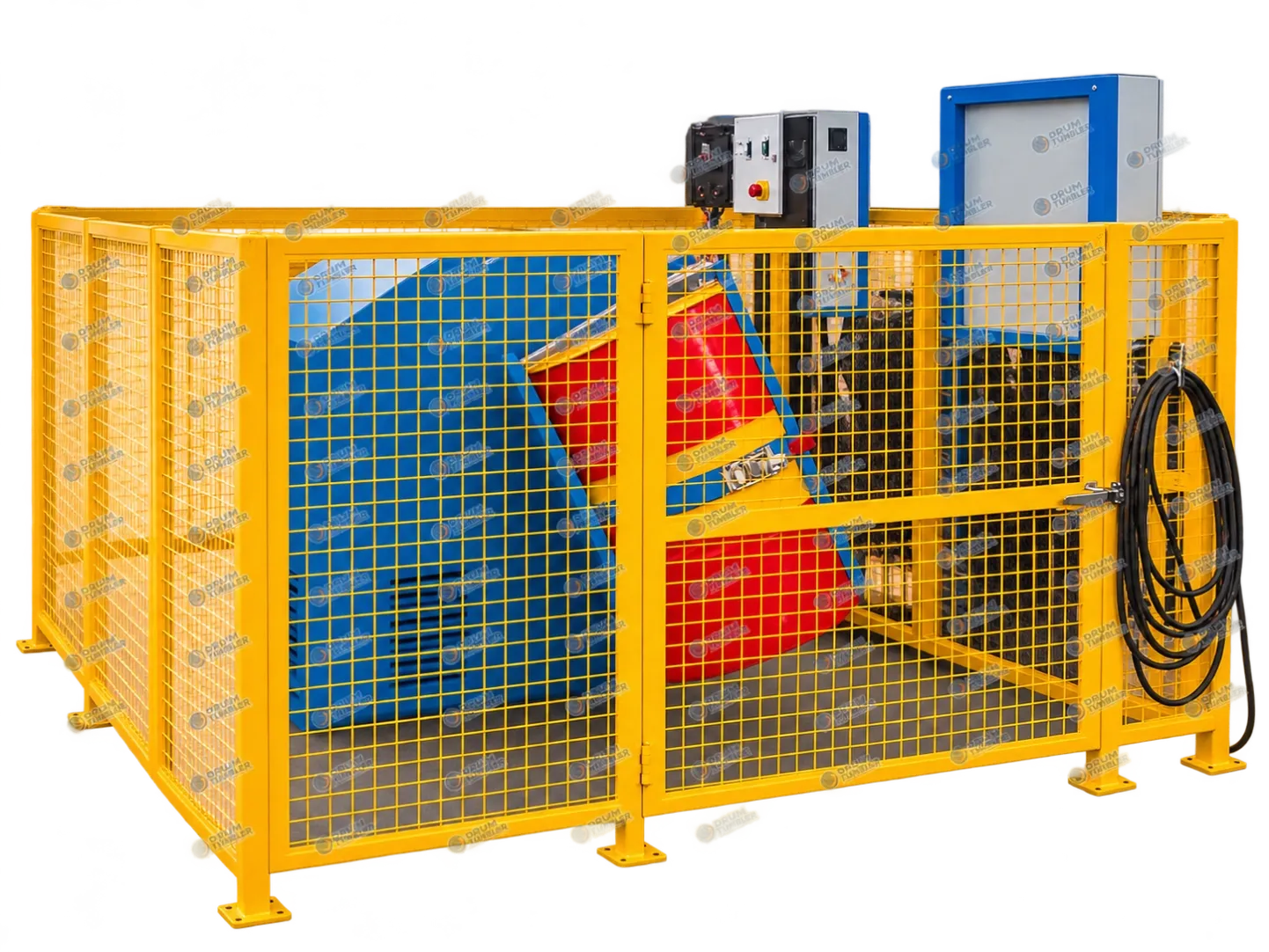
Standard drum tumblers do not fit every process. Your containers may be an unusual size or shape, your production may require several drums in one cycle, or your site may need pneumatic power, programmable controls or additional machine guarding.
DrumTumbler develops custom drum tumbling and closed-container mixing configurations around those practical requirements. We review the drum's actual dimensions and loaded weight, the material's mixing behavior and the operating conditions before recommending a design.
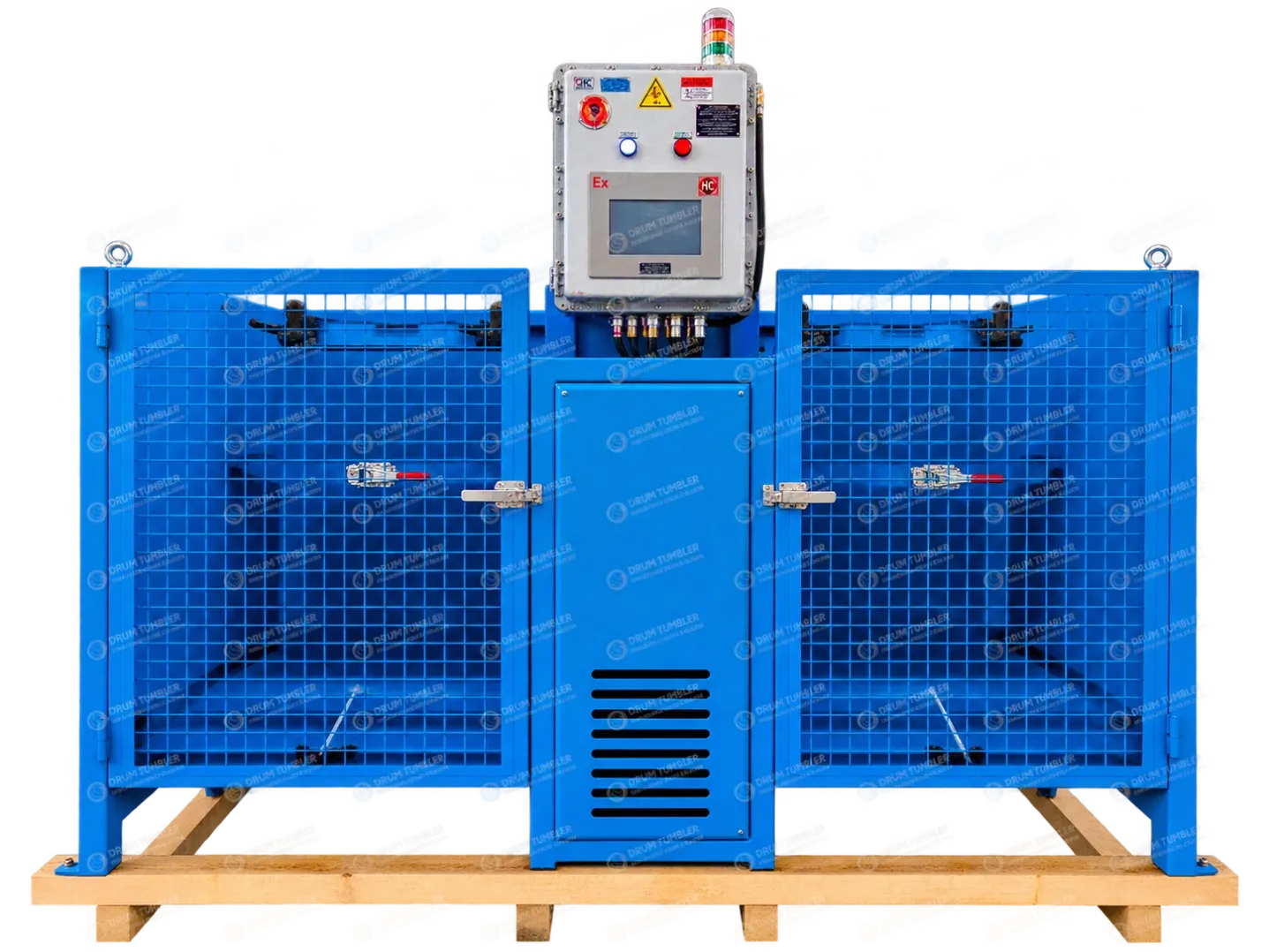
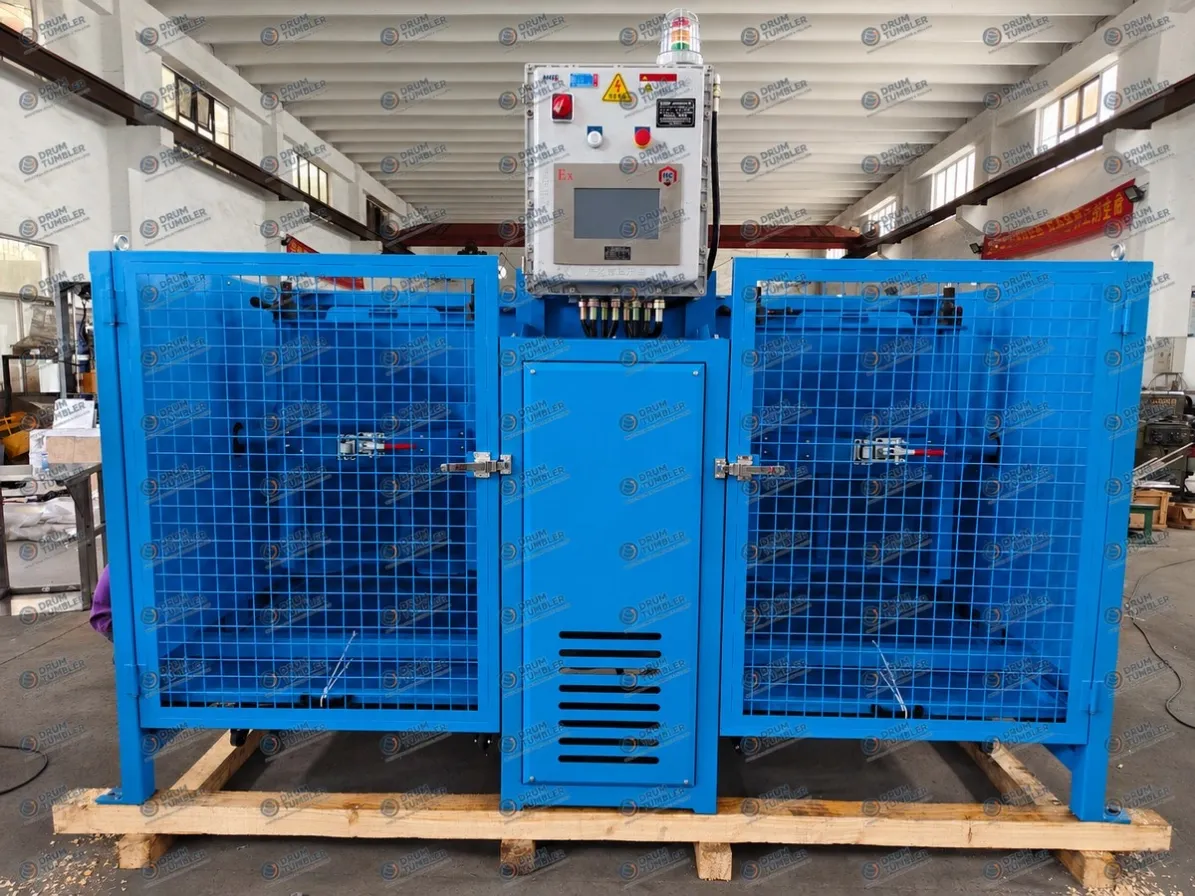
A standard drum holder does not fit the container diameter, height, closure or shape. You need to mix several sealed drums within a planned production cycle. Material settles during storage and must be redistributed before dispensing or processing.
The operating area requires a different drive, guarding arrangement or control interface. You need a defined speed range, mixing timer or repeatable stopping position.
Your process calls for a tumbling motion rather than conventional horizontal drum rolling. The goal is not customization for its own sake: it is a machine configuration matched to the real container and process.
20L, 50L, 100L and 200L examples; other sizes and shapes by review. Need from you: outside diameter, height, shape, lid and closure.
Single-drum, double-drum and purpose-built multi-station arrangements. Need from you: number of containers and cycle requirements.
Adjustable supports, clamps and container-specific retention. Need from you: photos/drawings and maximum filled weight.
Corner-over-corner tumbling, horizontal rolling or compound motion where appropriate. Need from you: product behavior and required mixing result.
Electric motor or pneumatic drive. Need from you: site utilities and operating environment.
Fixed or configurable speed, VFD, timer, PLC/HMI options. Need from you: required speed envelope and mixing cycle.
Local controls, touchscreen controls and selected automated positioning functions. Need from you: operator sequence and desired control functions.
Carbon steel or stainless steel constructions. Need from you: cleaning, corrosion and site constraints.
Guards, enclosed cabinets and interlocked access gates. Need from you: risk assessment and access requirements.
Voltage/frequency options, technical documents and project-specific compliance review. Need from you: installation country and applicable standards.
These are engineering options, not a promise that every combination is available or certified. Final capacity, drive selection, permissible load and safety system depend on the approved design.
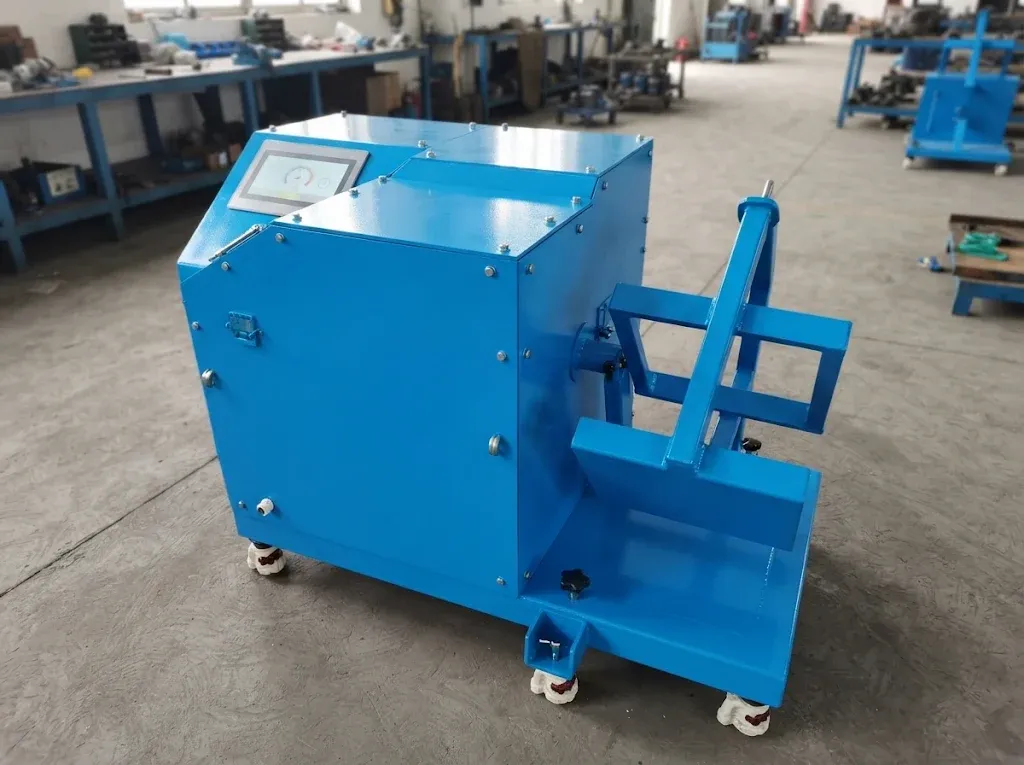
Real Custom Configurations
Requirement: A more programmable operating interface and defined end-of-cycle positioning for a 20L container. Engineering response: PLC touchscreen control for mixing settings plus an automatic return-to-position function.
Operators can enter the configured mixing parameters and have the holder return to its designated position at cycle completion, subject to the approved control sequence. Customization focus: HMI controls · adjustable operating settings · return-to-position function.
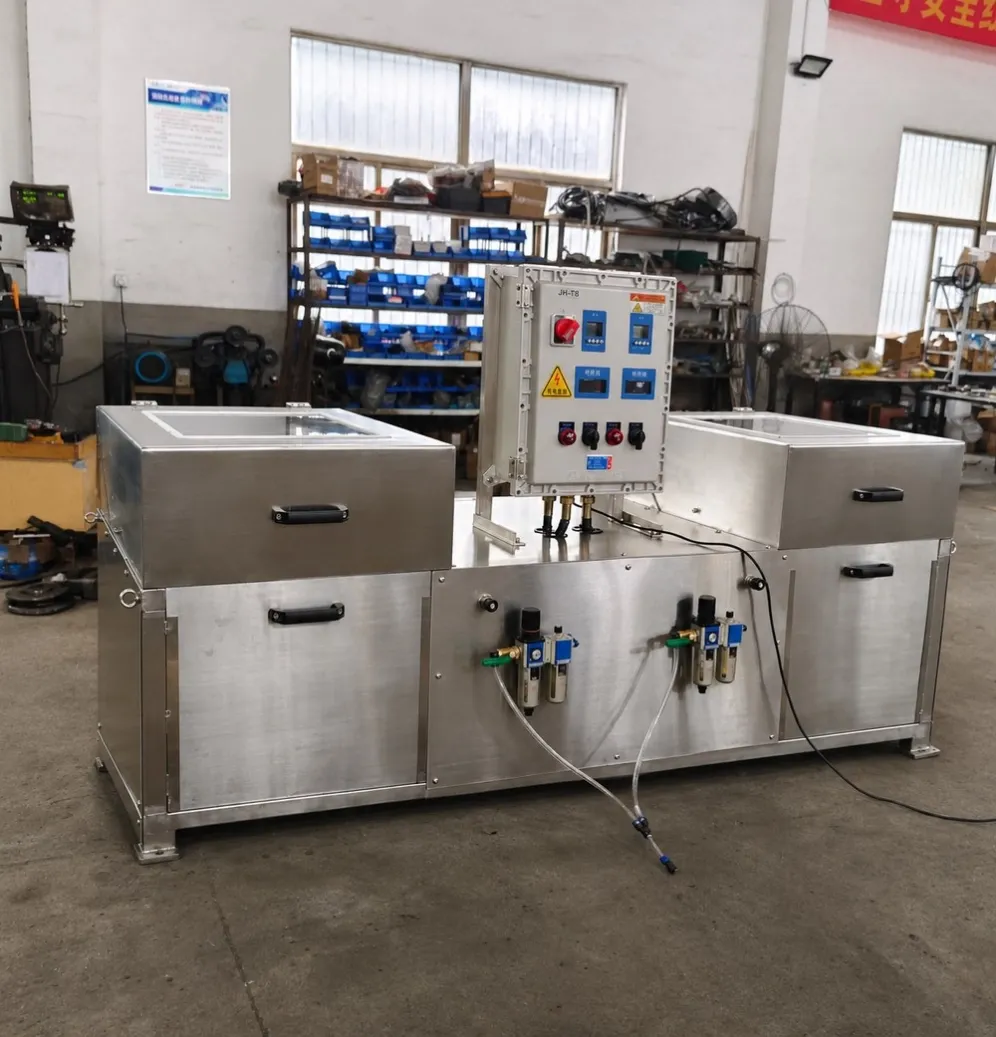
Requirement: Two enclosed 20L mixing positions with corrosion-resistant housing and an application-specific control arrangement for a workshop with flammable-atmosphere concerns.
Engineering response: Two enclosed drum stations, pneumatic drive, SS304 housing, viewing windows and an explosion-protected control box, giving two protected positions with external observation. Customization focus: dual enclosed stations · SS304 construction · pneumatic drive · control enclosure.
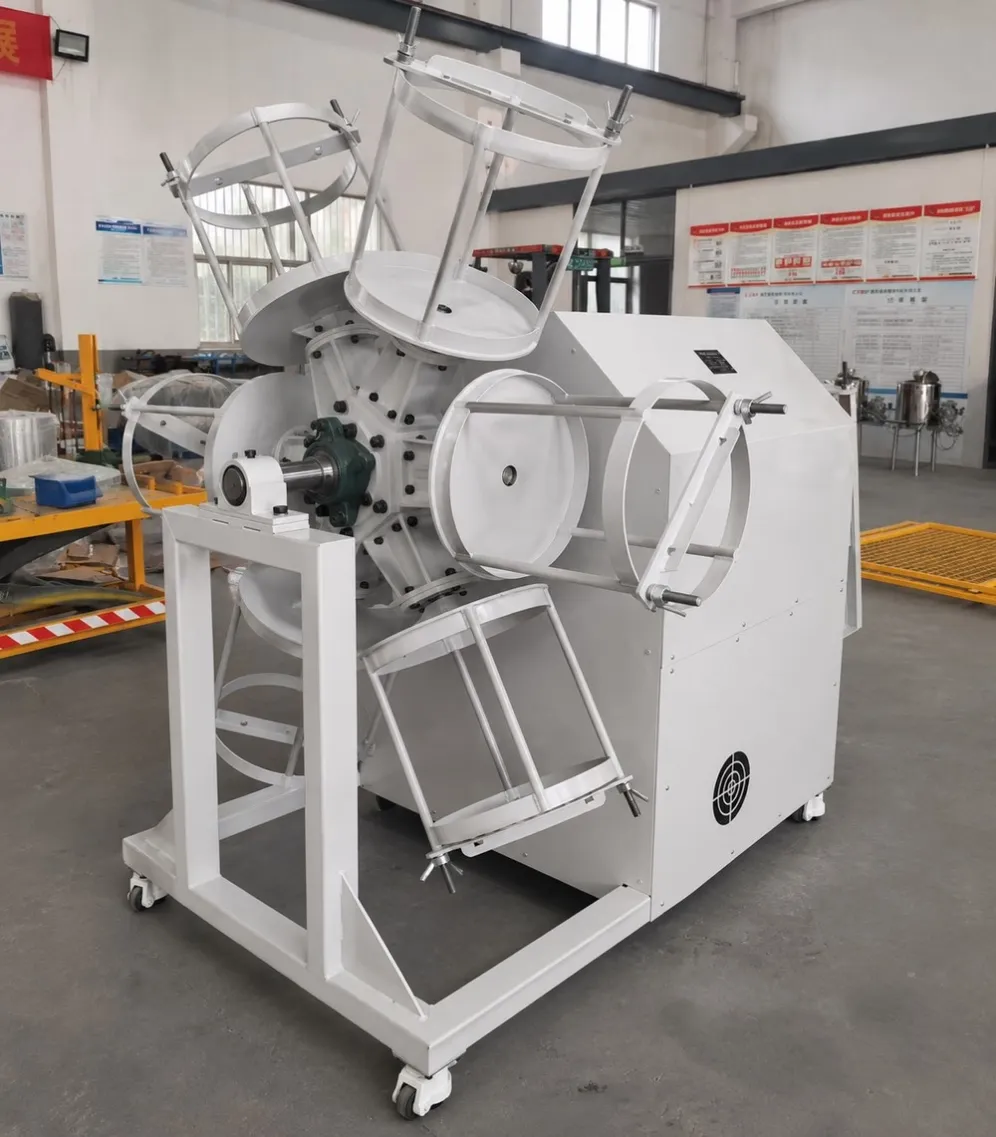
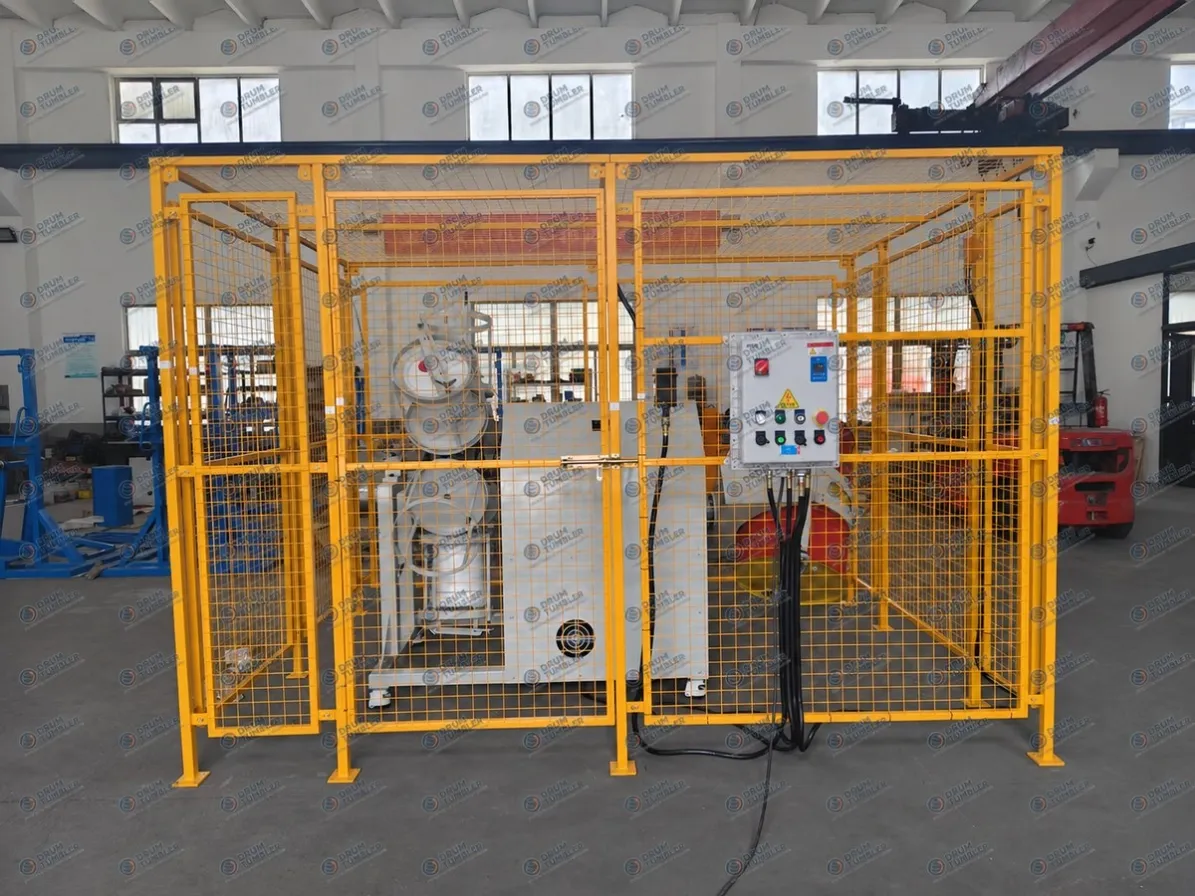
Requirement: Accommodate six 20L containers and one 200L container in a multi-station arrangement. Engineering response: Compound revolution-and-rotation mixing for the smaller stations and vertical tumbling for the 200L station. An external safety fence with interlocked access gate is optional.
Different drum formats and mixing motions are integrated into one equipment layout; simultaneous operating behavior must follow the verified final design. Customization focus: multiple station sizes · different mixing motions · optional interlocked guarding.
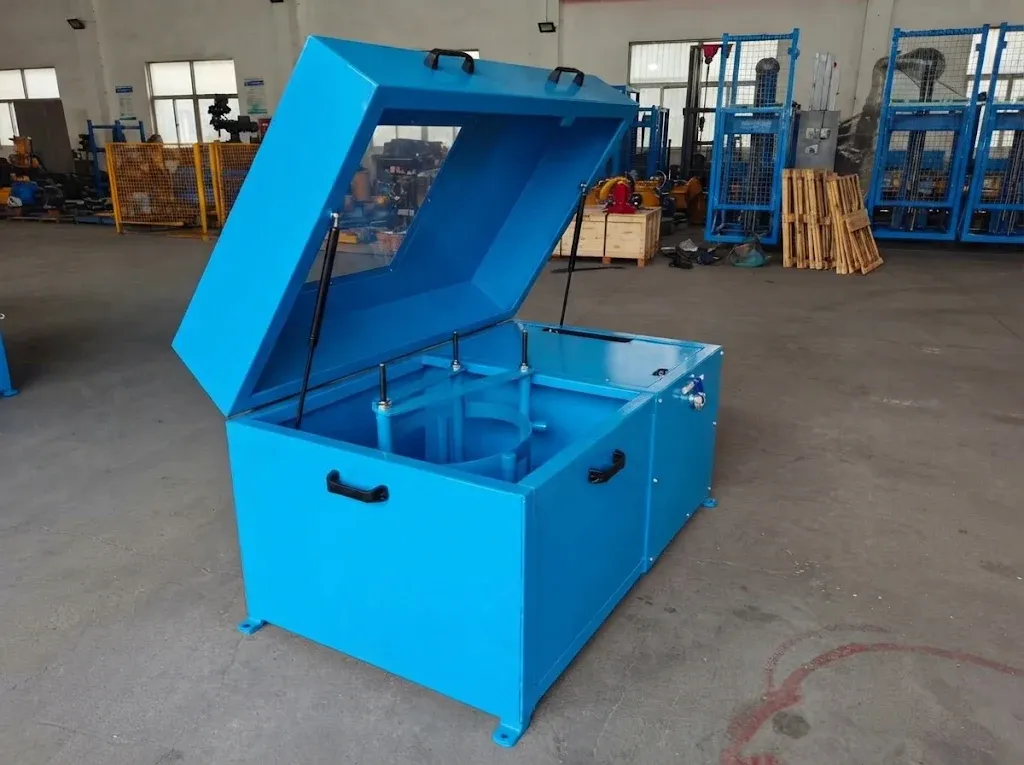
Requirement: Pneumatic mixing of a small closed container inside a protective enclosure. Engineering response: Enclosed single-drum holder, observation window and lid-linked stopping protection.
The rotating holder operates inside an enclosure, and lid opening triggers the specified stopping function; the container holder is configured for its verified geometry. Customization focus: single-drum pneumatic drive · protective enclosure · lid interlock · custom holding fixture.
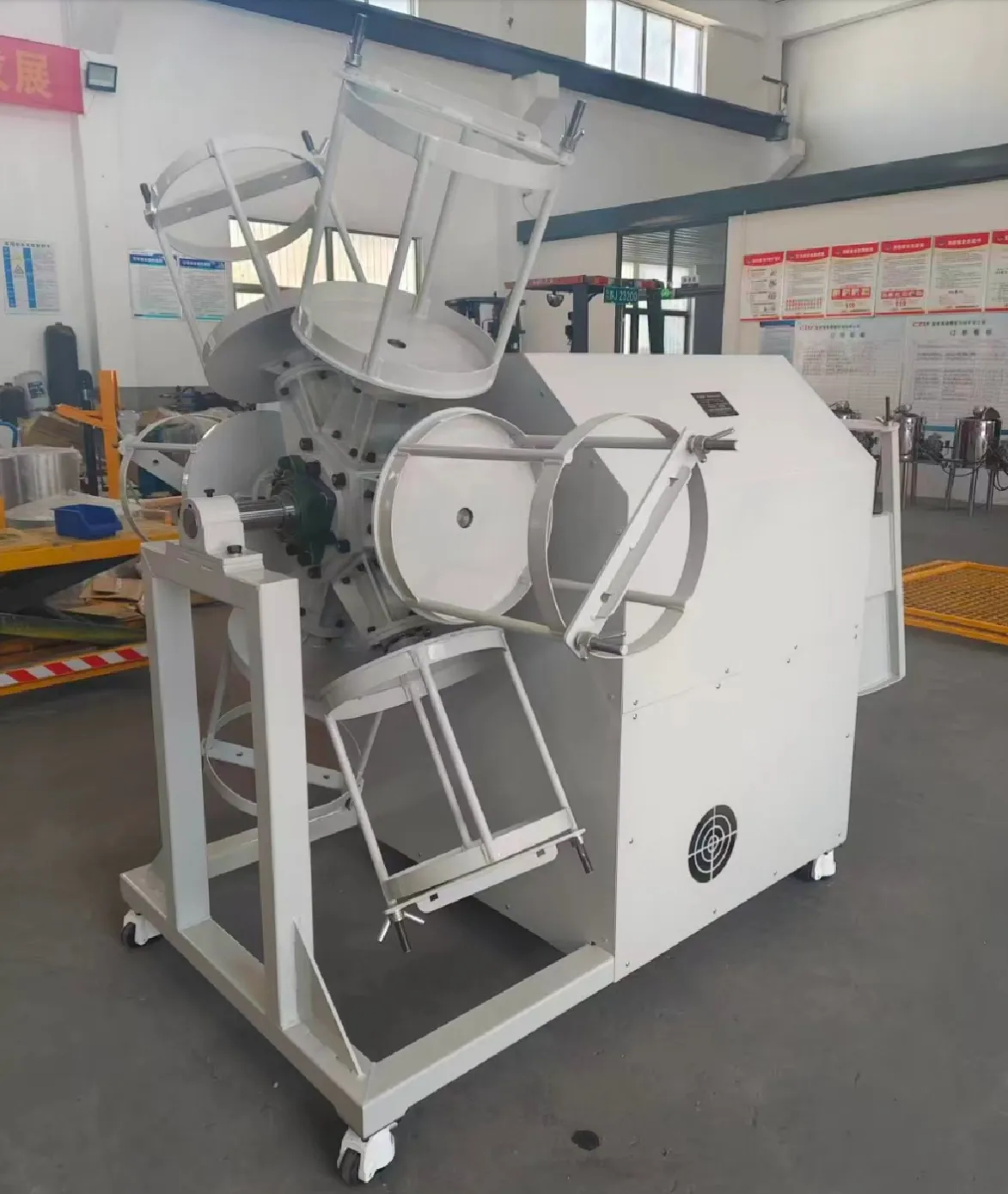
The secured container rotates through a tumbling path, repeatedly changing the orientation of its contents. This can help redistribute compatible liquid suspensions or free-flowing materials. Performance varies with viscosity, settled solids, headspace and cycle conditions.
The container rotates around its own longitudinal axis while supported on rollers. It may be appropriate when a steady, more gentle rolling motion is desired. It is not mechanically identical to end-over-end tumbling.
Selected custom stations combine movement around a main axis with movement around the container's own axis. The DT-D7C's 20L arrangement is an example.
Not every material mixes effectively by tumbling. Highly viscous, non-flowing or strongly compacted products may need a different technology or a material trial.
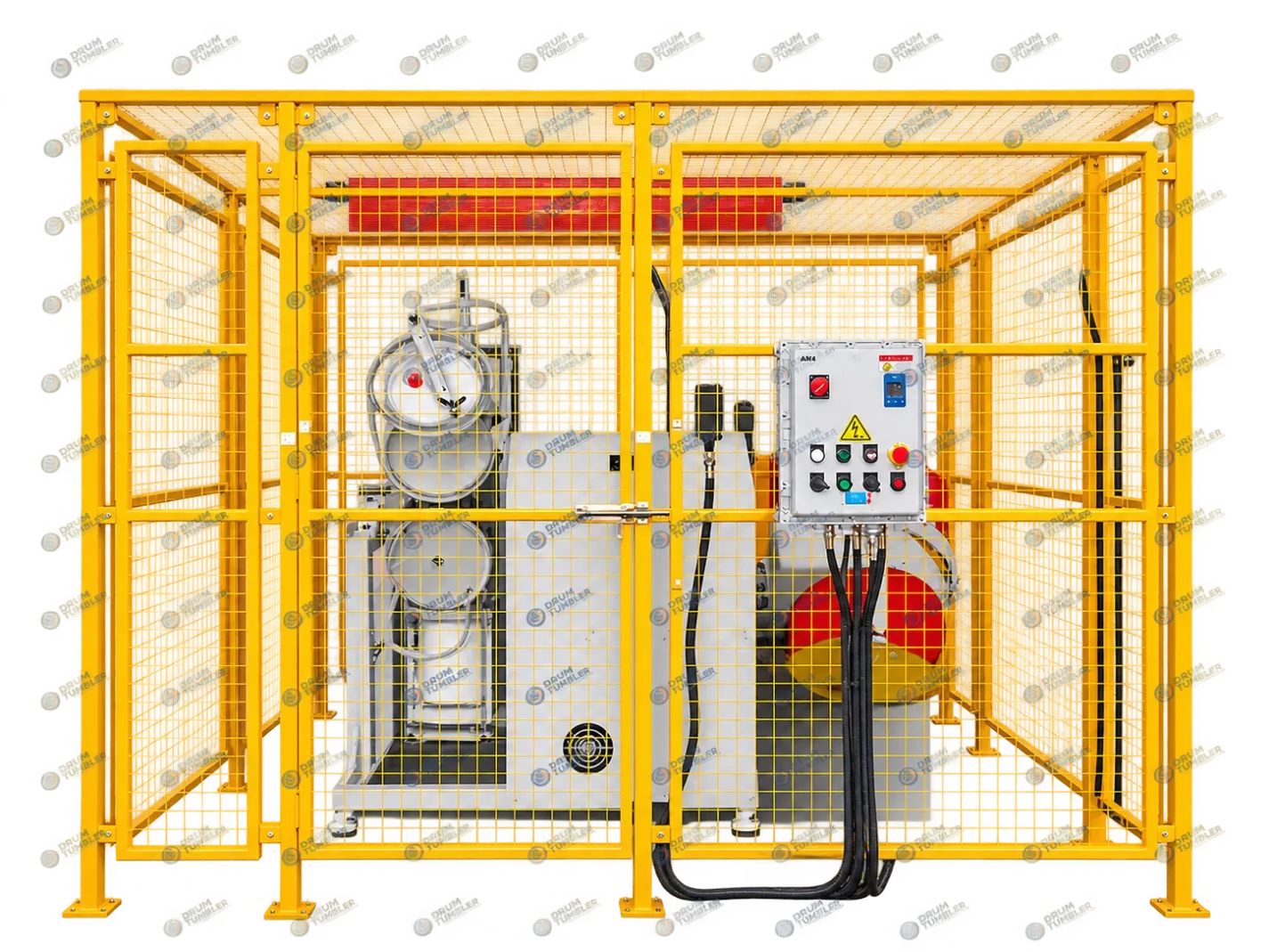
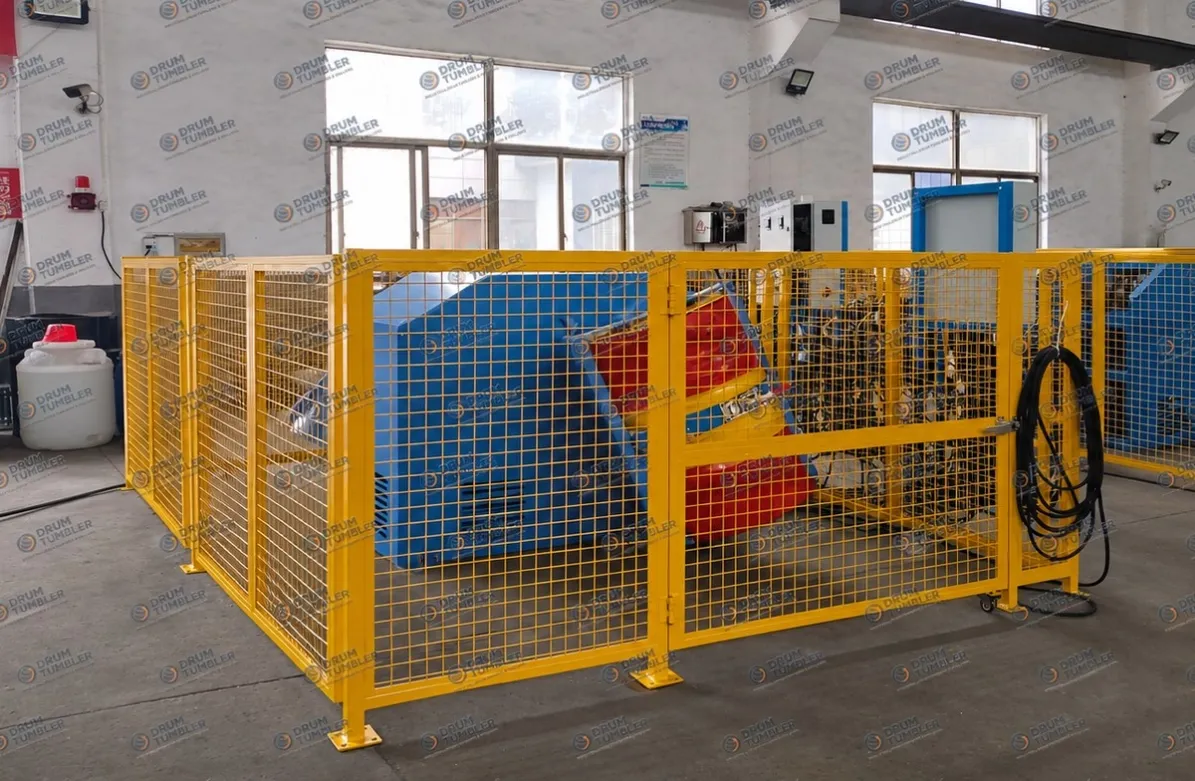
Rotating drum equipment can present entanglement, crushing and unexpected-start hazards. Depending on the machine and installation, guarding may include a cabinet, perimeter fence or an access gate with a safety interlock.
Where an interlocked gate is specified, opening the gate triggers a protective stop.
For facilities handling flammable materials, we review the selected drive and electrical components against the site's hazardous-area classification. Pneumatic power alone does not make the complete machine explosion-proof.
An explosion-protected component does not by itself establish the hazardous-area rating or certification of the complete machine. Equipment suitability requires review of the area classification, ignition risks and supplied conformity documentation.
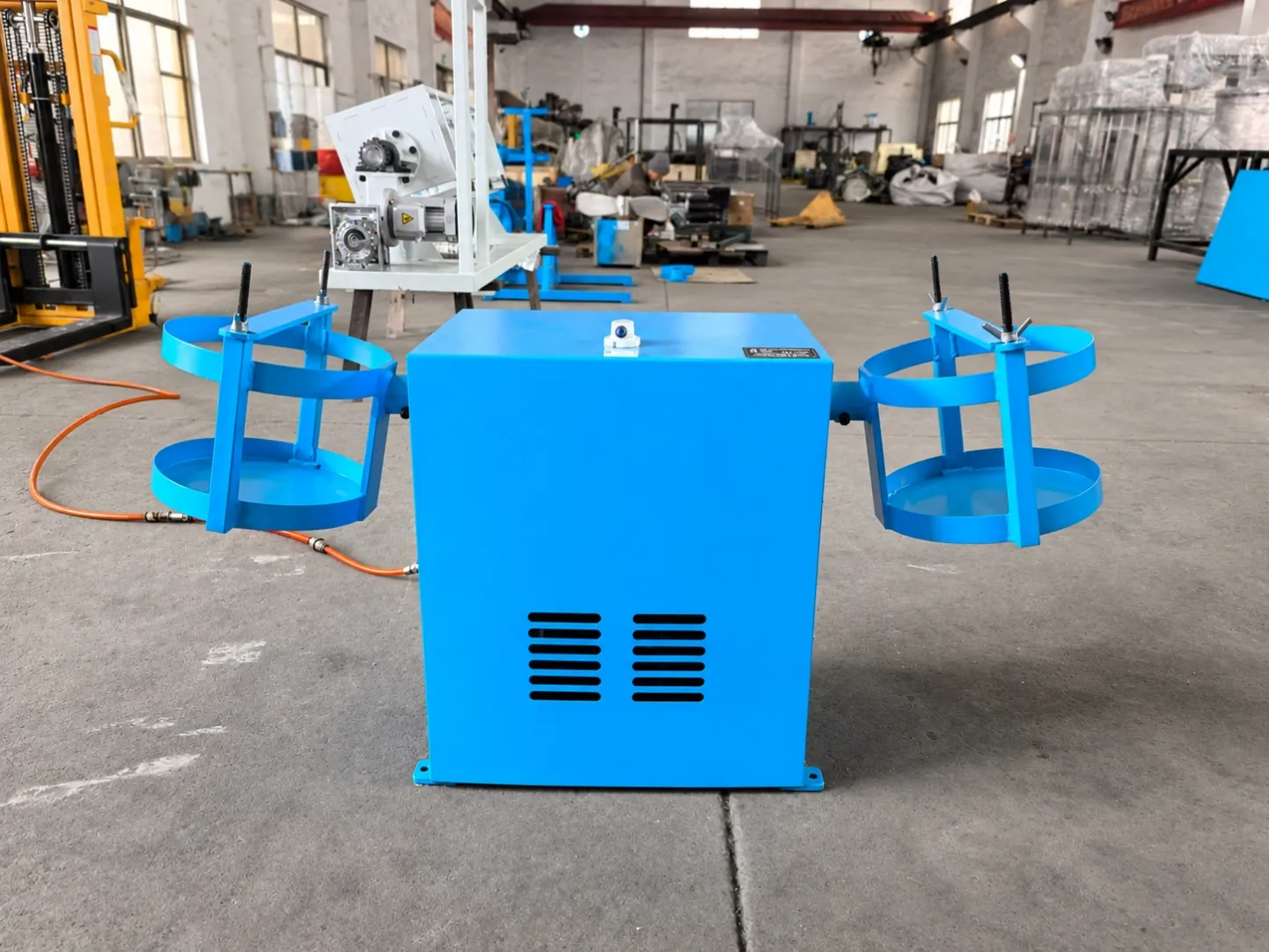
A custom mixer may be useful where sealed paint containers require re-homogenization before dispensing or spraying, subject to material testing. Manufacturers handling different container sizes may require dedicated clamps, mixing programs or multi-station operation for stored formulations.
Compatible inks and coating products that settle during storage may benefit from controlled in-container movement before use.
Suitability depends on viscosity, formulation stability, closure integrity and processing requirements. Reactive components must not be combined merely because they are supplied in drums. These are potential applications, not claims of measured results or undisclosed customer installations.
Send photos or drawings of the container, its outside dimensions, closure design and maximum filled weight. Also describe whether the material is liquid, powder, paste or a settled mixture.
Tell us whether the goal is redistribution after storage, homogenization of compatible ingredients or another defined process result.
Confirm the installation environment, available utilities, desired batch cycle, cleaning expectations and any guarding or compliance requirements.
We assess feasible drum retention, mixing motion, drive, speed, controls and enclosure arrangements before preparing a configuration proposal.
Capacity, load, speed, controls, safety devices, materials of construction and documentation are confirmed before manufacture. No custom configuration is treated as standard until approved.
The approved configuration is manufactured and prepared for shipment using packaging selected for its size, weight, center of gravity and lifting points.
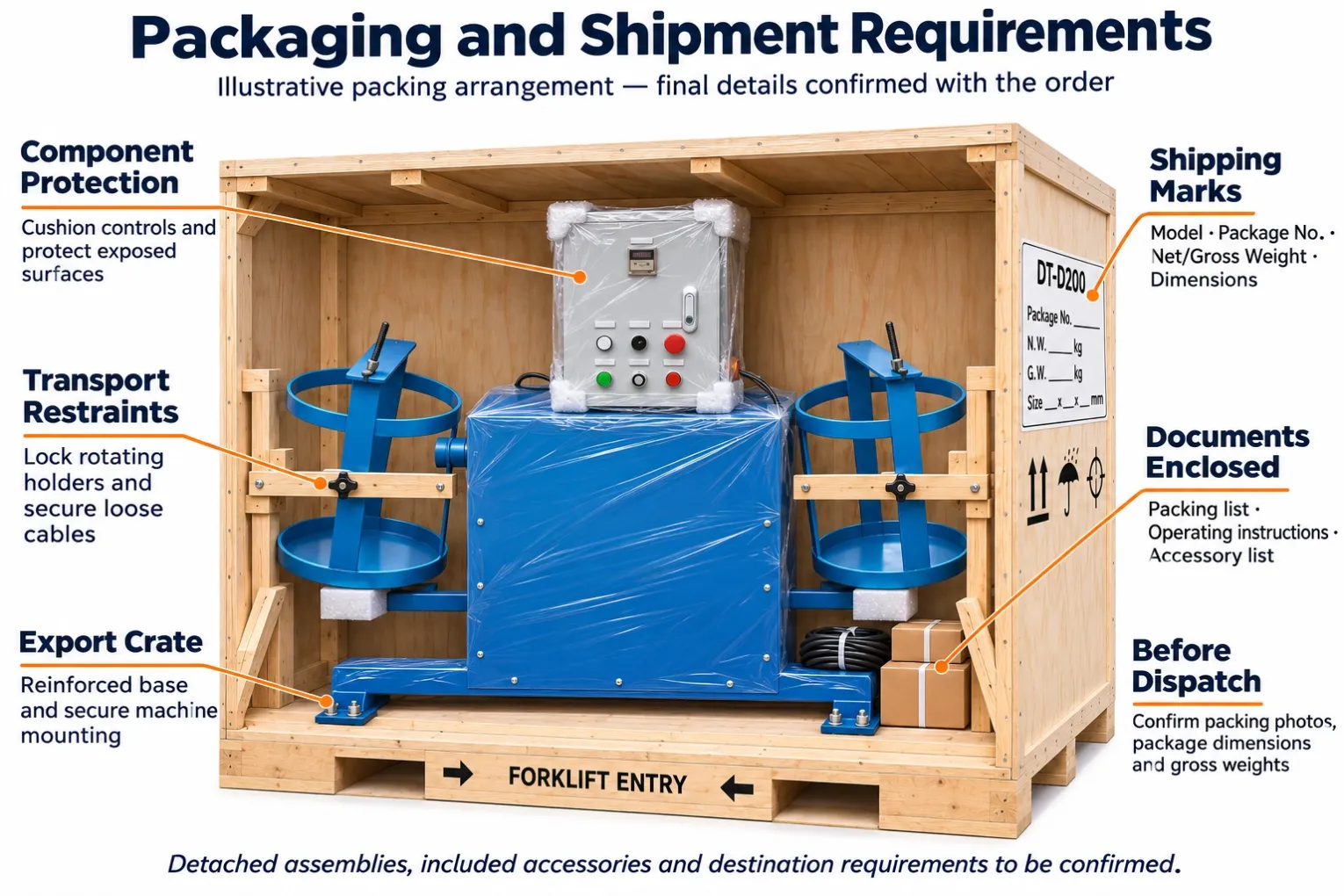
Custom machines may have non-standard dimensions, projecting controls, safety fences or multiple stations, so packing is confirmed against the finished machine's actual size, weight, center of gravity and lifting points.
Exposed painted and machined surfaces are protected against transit abrasion, with additional wrapping where needed. Plastic film or suitable moisture-barrier wrapping is used according to the transport route and storage conditions.
The machine is blocked and secured inside the crate so the load cannot shift in transit. A wooden export crate or plywood case is selected according to dimensions and gross weight. Guards, fences, fasteners and accessories are packed and identified separately where removal is necessary.
The packing method is part of the order confirmation for custom configurations; final packing follows the approved machine configuration and destination requirements.
To start an engineering review, please send: your company and destination country; photos or drawings of the drum or pail; outside diameter, height and closure type; maximum filled weight; and a material description or safety data sheet.
Include the viscosity and settling behavior if known, the number of containers per mixing cycle, available electrical or pneumatic supply, and any guarding, control or certification requirements. Custom designs are subject to engineering review, configuration approval and testing where appropriate.
You can also email your drum details to export@drumtumbler.com.
If you are looking for private-label manufacturing rather than an end-user machine, please visit our OEM & ODM page.