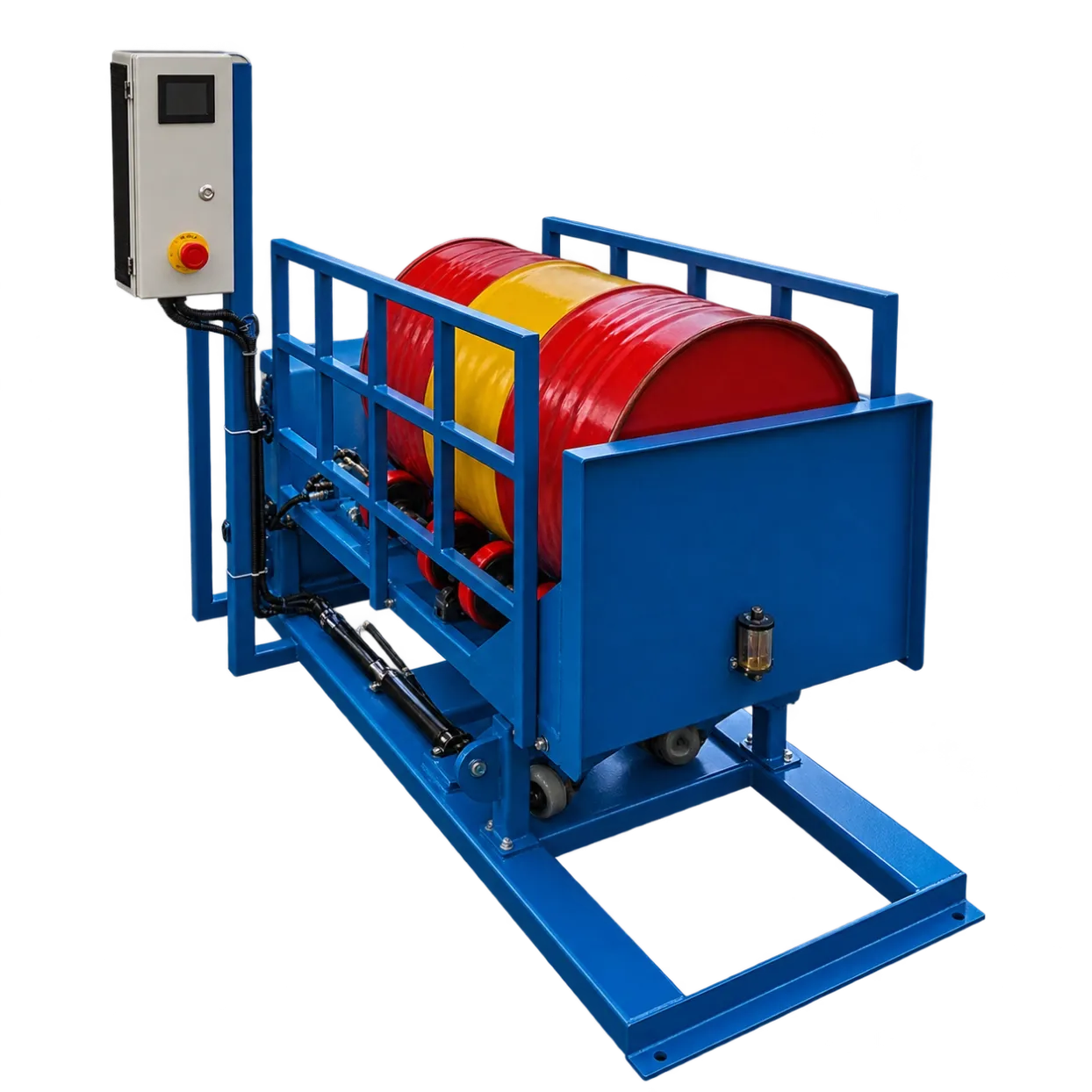
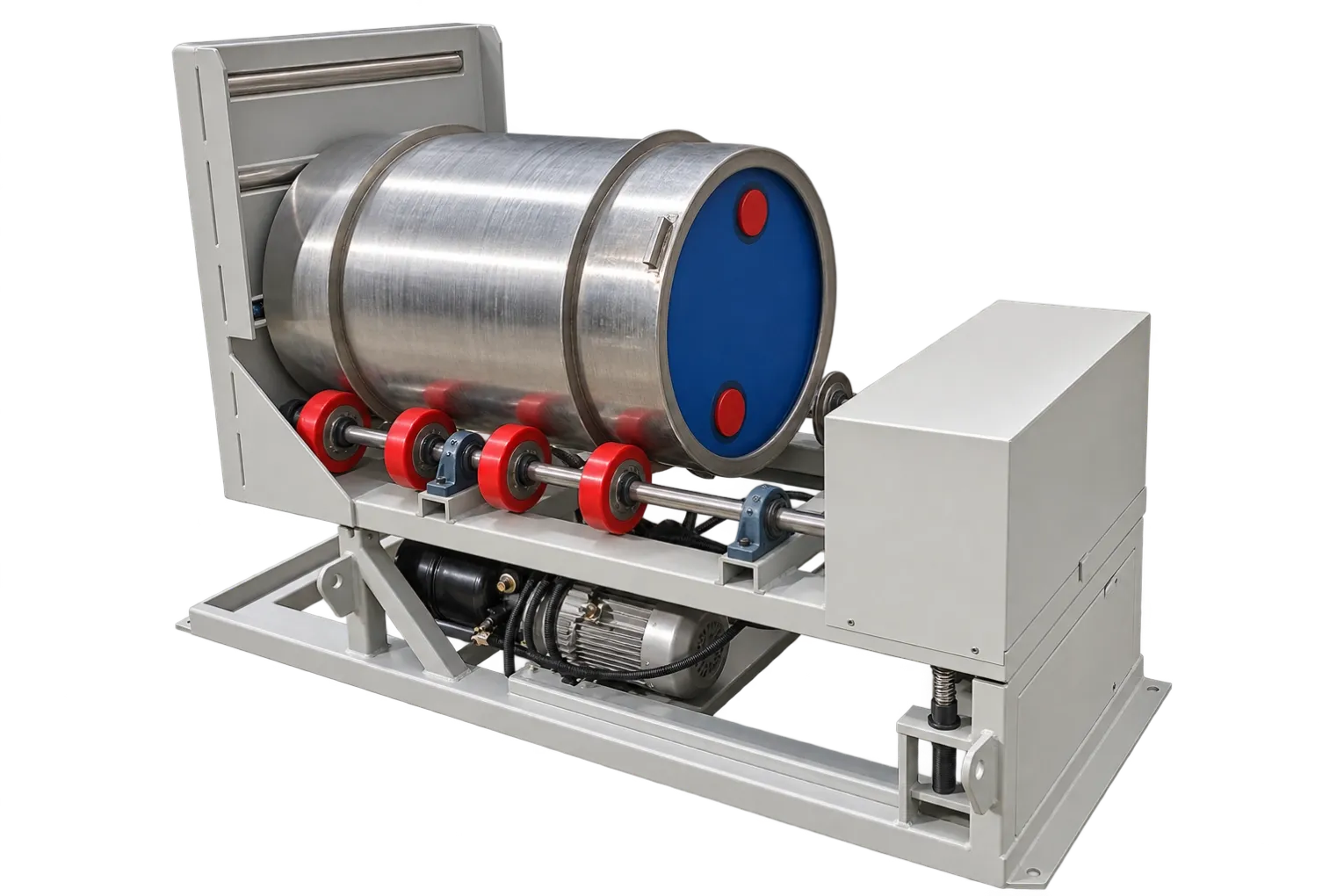
Yes — dry flavor and seasoning powders can be re-blended inside the sealed drum they arrived in. A drum tumbler rotates the closed drum, and the powder inside re-homogenizes without the lid ever coming off. No dust escapes into the room, no foreign odor or moisture gets in, and there is no mixer to wash between batches.
Powders are awkward in drums for three predictable reasons. First, they segregate. During storage and transport, fine and coarse particles separate — vibration settles the fines while larger granules work their way up, so the top of the drum no longer matches the bottom. A seasoning blend of fine salt, coarse black pepper, and dried herb flakes is a textbook case: after a week on a truck, the salt sits low, the pepper rides high, and a sample scooped from the top fails the specification even though the drum as a whole is still correct. Re-blending fixes the drum; reformulating was never the problem. Second, fine powders go airborne the moment a drum opens. Flavor powders, ground spices, and powdered additives drift, coat nearby surfaces, and carry aroma into the next batch down the line. In a plant running garlic powder on one line and vanilla flavor on the next, that drift is a quality complaint waiting to happen. Third, conventional mixing means transfer: drum to mixer, mixer to packing. Every transfer is a chance for contamination and a cleaning job afterward — and cleaning a mixer between, say, a smoked paprika blend and a vanilla flavor is not a quick rinse. It is downtime, water, and a validation check before the next run.
Sealed in-drum mixing removes all three problems at the point where they start: the open lid.
With the lid closed, dust has nowhere to go. The powder stays inside the drum through the whole cycle, so the room stays clean and the batch keeps its aroma profile — nothing drifts out, and nothing drifts in. Moisture-sensitive powders are protected for the same reason: the seal that kept them dry in storage keeps working during mixing.
Changeover becomes a drum swap instead of a cleaning shift. No blade, ribbon, or vessel touches the product — the drum itself is the mixing vessel. When the batch is done, the drum goes to packing or storage, and the next drum goes on the machine. For a plant running many small flavor or seasoning SKUs, that is the difference between a schedule built around cleaning and a schedule built around orders.
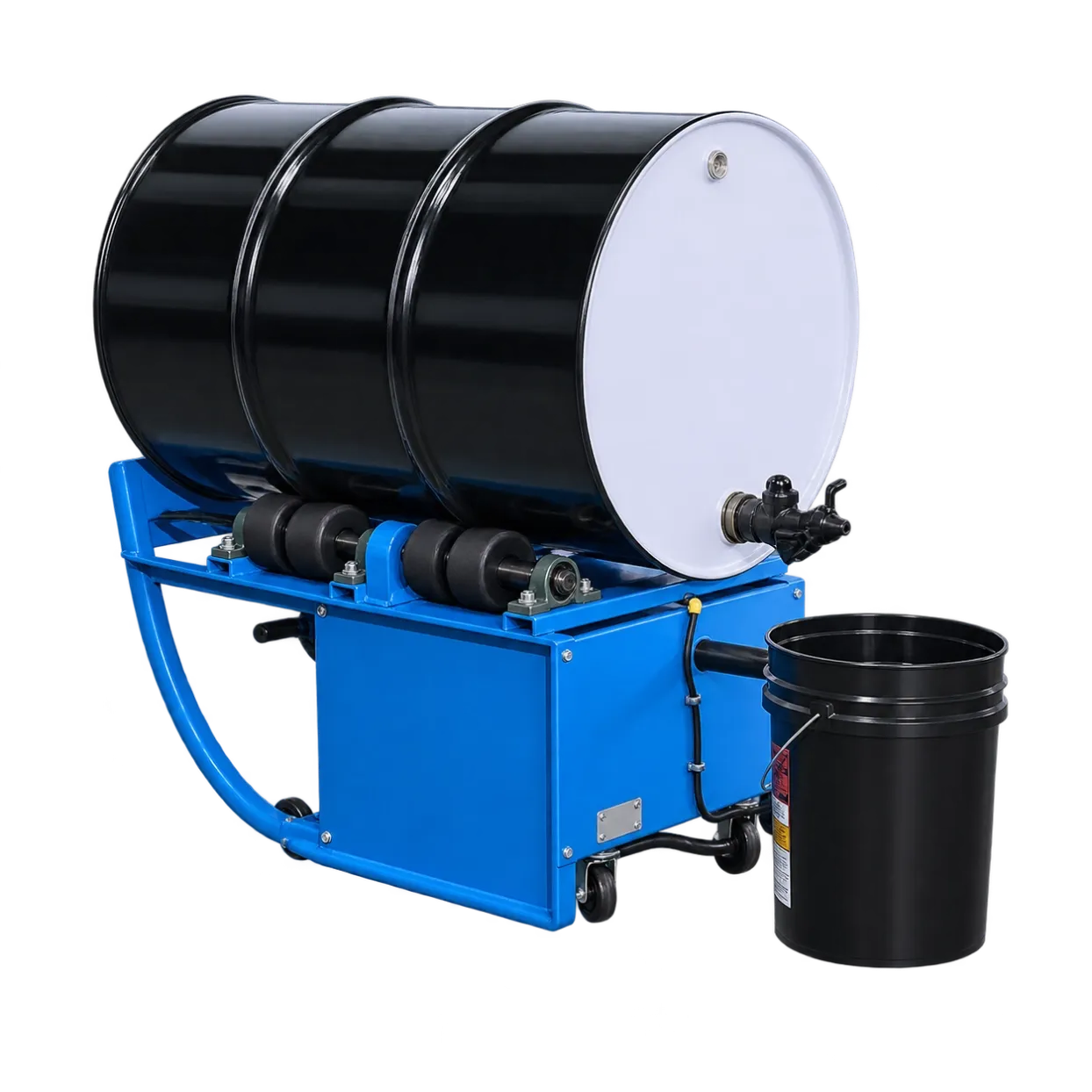
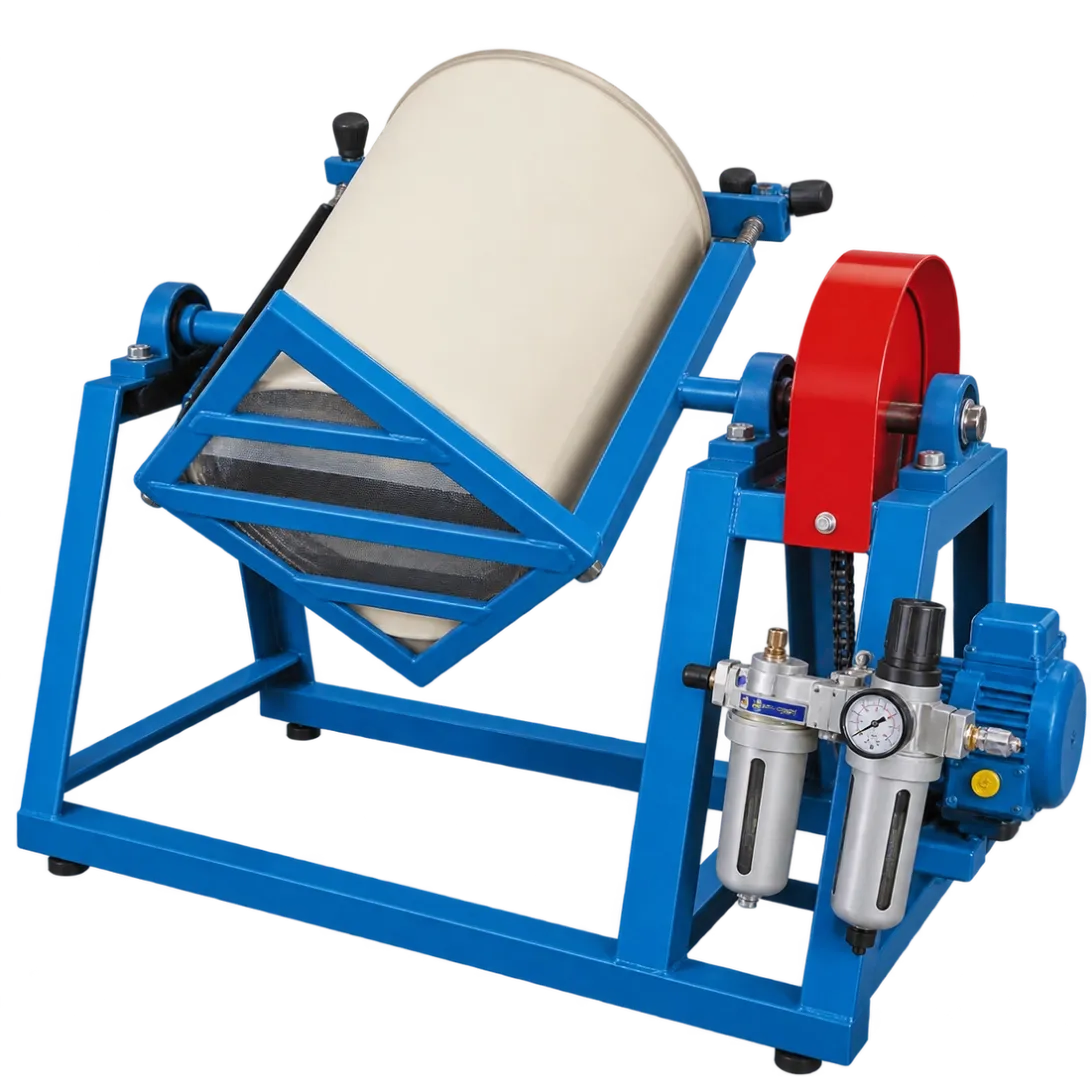
The motion that does the work is corner-over-corner tumbling: the drum is secured and rotated so its contents are lifted and folded over themselves, cycle after cycle. That folding action is what breaks up the segregated layers and re-blends fines with coarse particles. For ingredients that need a gentler hand, the roller series turns the drum horizontally in a steady rolling motion with full support along the drum — the same sealed principle, less vigorous action.
Match the model to the batch, starting with the drum:
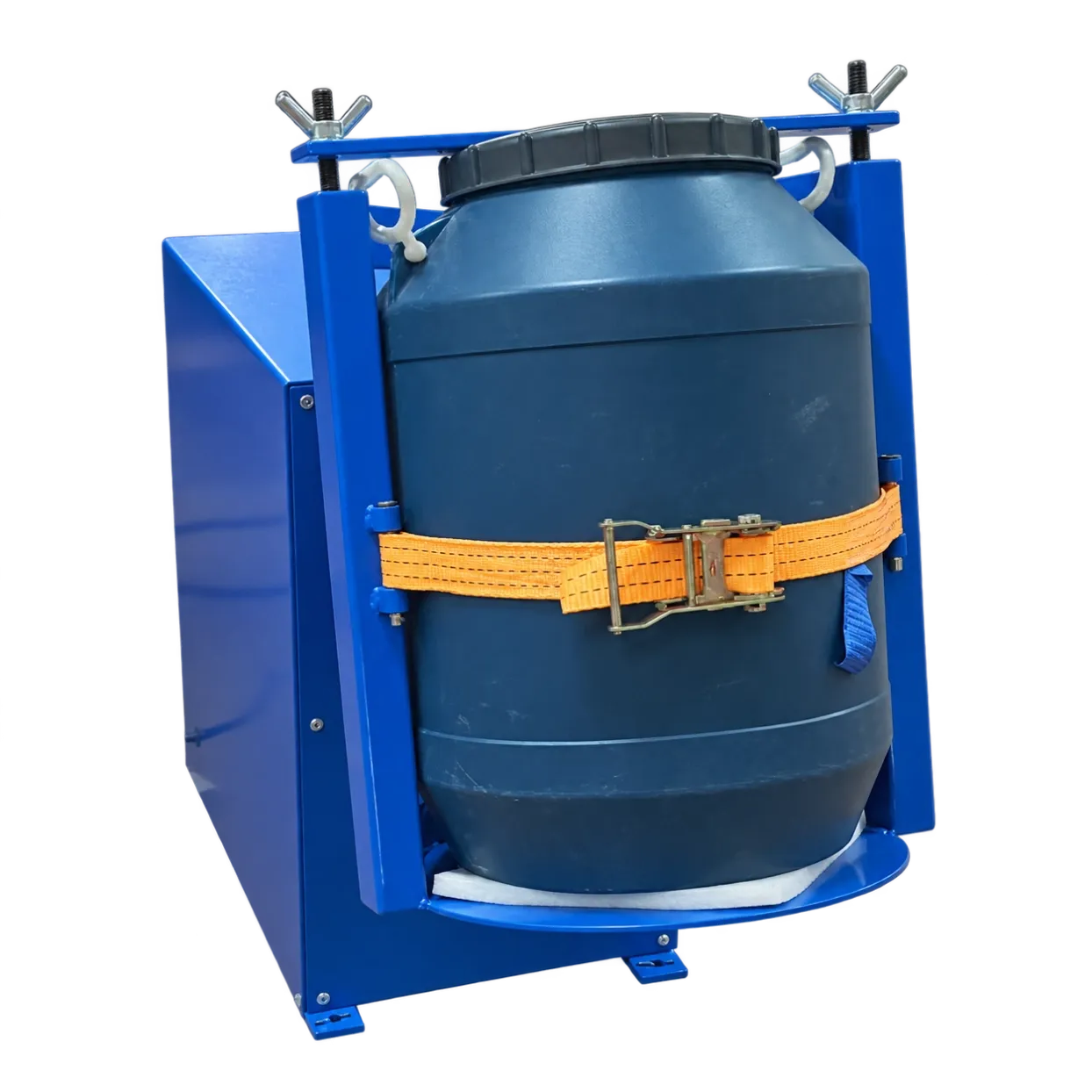
- Small test and R&D batches in 1–5 gallon (5–20 L) pails fit the DT-S5 single-can tumbler (0.5 HP, 220 V, fixed 50 RPM), or the DT-D5 double-can tumbler (1 HP, 220 V, fixed 50 RPM) when two pails need the same cycle.
- A 50-litre drum fits the DT-S50 (0.75 kW, 0–30 rpm adjustable, explosion-proof motor, safety enclosure).
- 100-litre drums fit the DT-D100 double-drum tumbler (1.5 kW (2 HP), 0–30 rpm adjustable, dual drum holder, timer control), or the DT-G100 roller (1 HP, 220 V, 10–30 RPM adjustable) for gentler rolling.
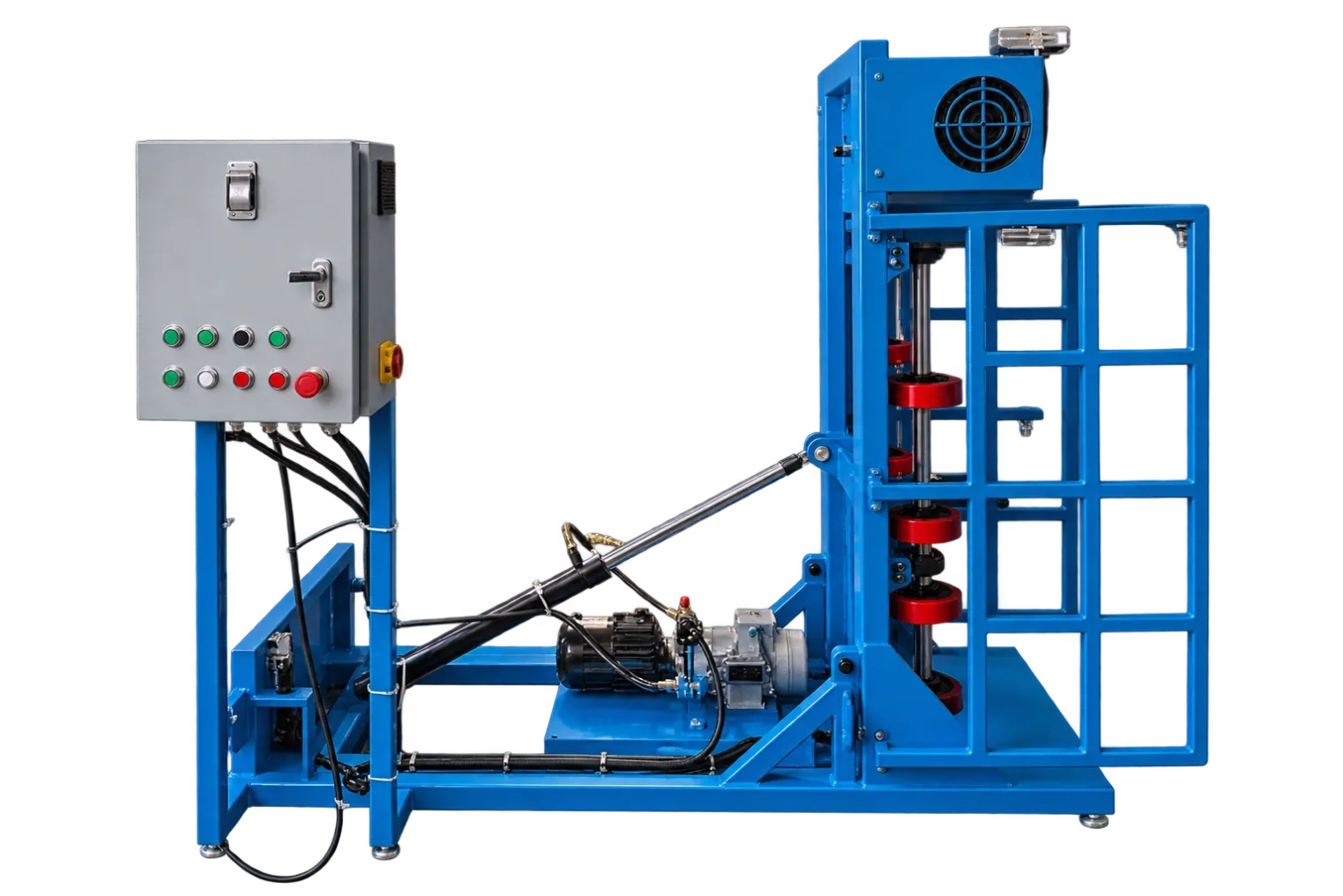
- Standard 200-litre production drums fit the DT-S200 single-drum tumbler (1.5 kW (2 HP), 0–18 rpm adjustable, hydraulic tilting, explosion-proof motor), or the DT-D200 double-drum tumbler (3 kW, 0–18 rpm adjustable, safety interlock) for two drums per cycle.
A sensible way to start is with your worst-behaved SKU: take one drum of the blend that fails top-sample checks most often, run a tumbling cycle, then sample top, middle, and bottom against your specification. One drum is enough to prove the principle, and the adjustable speed on most models lets you tune the cycle to the blend instead of guessing.
One practical detail matters more than it sounds: the drum never stops being the batch container. There is no transfer log to reconcile, no repacking step, and traceability stays with the drum from mixing to packing. For seasoning and flavor houses juggling dozens of blends, that simplicity is the point.
It is worth being clear about what tumbling does not do. A drum tumbler re-blends; it does not grind. If moisture got into a drum and the powder formed hard cakes or lumps, tumbling will not mill them back to powder — that needs a mill, and the drum should have stayed sealed in the first place. Likewise, tumbling will not dry a damp powder or fix a blend that was weighed wrong. What it does reliably is restore uniformity to a dry blend that segregated in storage or transport, which is the most common reason a drum of seasoning fails a top-sample check.
Sealed mixing proved itself on coatings and adhesives, where settled pigment was the problem. Powders have the same problem, plus one extra — dust. Keeping the lid closed solves both.
Frequently Asked Questions
Can dry powders really blend evenly without opening the drum?
Yes. Corner-over-corner tumbling lifts the powder and folds it over itself with every rotation, which re-blends the segregated layers that form during storage. The result is a uniform batch without ever exposing the powder to air. Cycle time depends on the blend — start within the machine's adjustable speed range and validate against your own specification.
Will tumbling damage fragile granules or coated particles?
Match the motion to the ingredient. Robust dry blends suit the active tumbling motion; fragile granules or coated particles do better with the gentler horizontal rolling of the roller series, or with a lower speed setting on the adjustable-speed tumbler models. A short trial batch is the reliable way to confirm.
How do you switch flavors without cleaning the machine?
There is nothing to clean. No blade or vessel contacts the powder — the sealed drum is the mixing vessel. Finish one flavor, take the drum off, put the next drum on. Cross-contamination between batches is avoided because the product never leaves its original container. The only thing that changes between runs is the drum on the cradle, so a plant can run garlic, paprika, and vanilla in sequence with changeover measured in minutes, not shifts.
Which model fits a standard 200-litre drum of seasoning?
The DT-S200 handles one 200-litre steel or plastic drum per cycle with corner-over-corner motion, hydraulic tilting for loading, and an explosion-proof motor. If you run two drums of the same blend, the DT-D200 processes both in one cycle with its dual-drum design and safety interlock. Both keep the drum sealed throughout, so the choice comes down to throughput: one drum per cycle, or two.