How to Choose a Drum Tumbler: Drum Size, Drum Type, Single or Double, and Speed
Choosing an industrial drum tumbler comes down to four decisions: drum size, drum type, one drum or two, and speed. Work through them in order and the model list narrows to one or two options.
How do you choose a drum tumbler? Start with the drum, not the machine. Four decisions, taken in order, narrow the choice to one or two models: drum size, drum type, one drum or two per batch, and speed. Get those four right and the rest — motor, voltage, safety features — follows from the model.
Step 1: Measure the drum
The first question is the simplest and the one most often skipped: how big is the drum, and what is it made of?
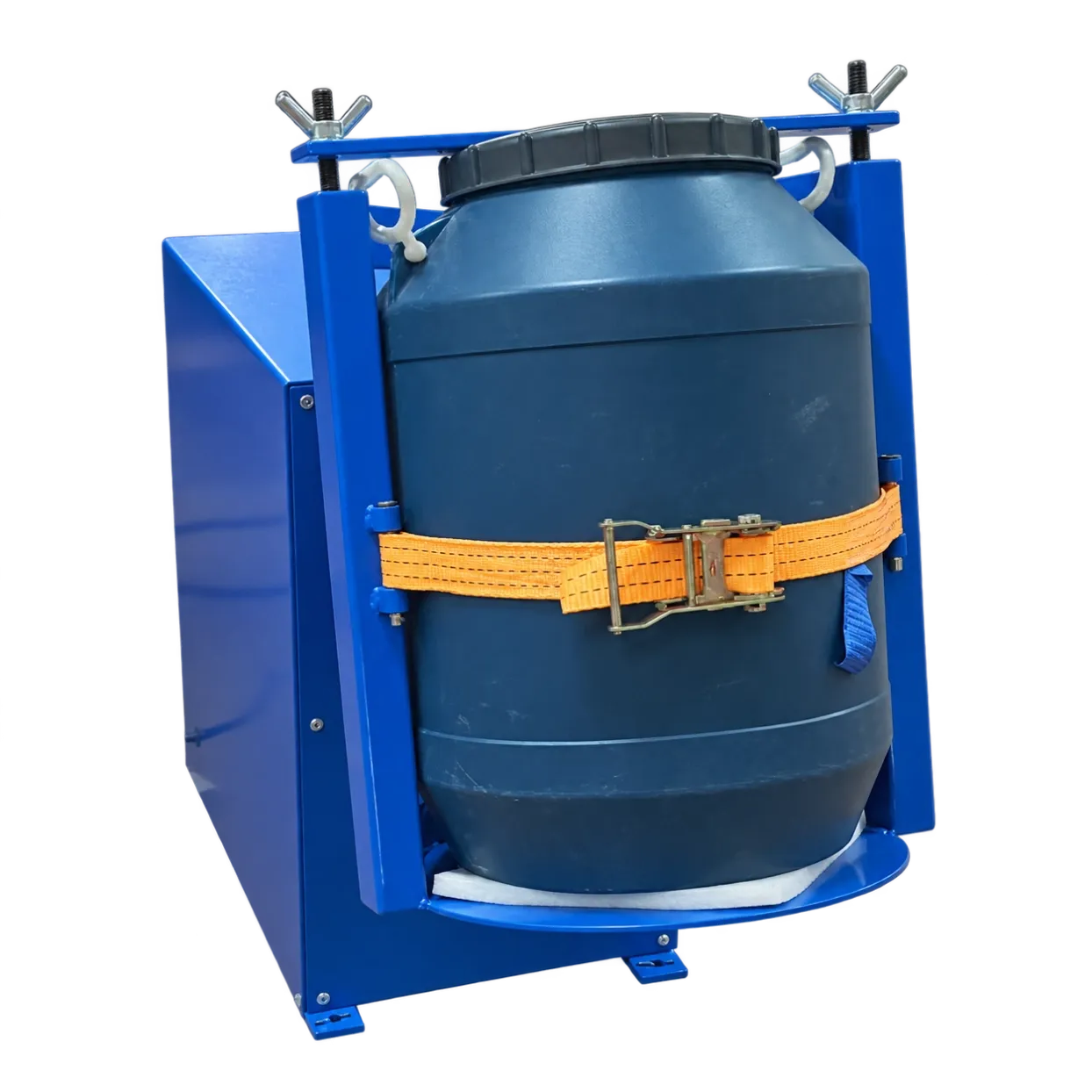
DrumTumbler's standard series covers 5 L to 200 L. Small 1–5 gallon (5–20 L) steel or plastic pails fit the DT-S5 and DT-D5. A 50-litre steel or plastic drum fits the DT-S50. A 100-litre drum fits the DT-D100 tumbler and the DT-G100 roller. A 200-litre steel or plastic drum fits the DT-S200 and DT-D200 tumblers and the DT-G200 roller, which also takes 200–220 litre steel or L-ring plastic drums.
Drum type matters as much as size. A steel drum, a plastic drum, and a fiber drum behave differently in a holder, and the holder is built around the drum it grips. Check the drum material before shortlisting a model: if the drum falls outside the standard steel-or-plastic range, that is a customization question, not a reason to force the wrong holder. Customized drum tumblers are available for 5 L to 200 L, for steel, plastic, or fiber drums, with custom motion, custom power, and variable speed.
Step 2: One drum or two per batch?
The second decision is about throughput: how many drums need mixing in one cycle?
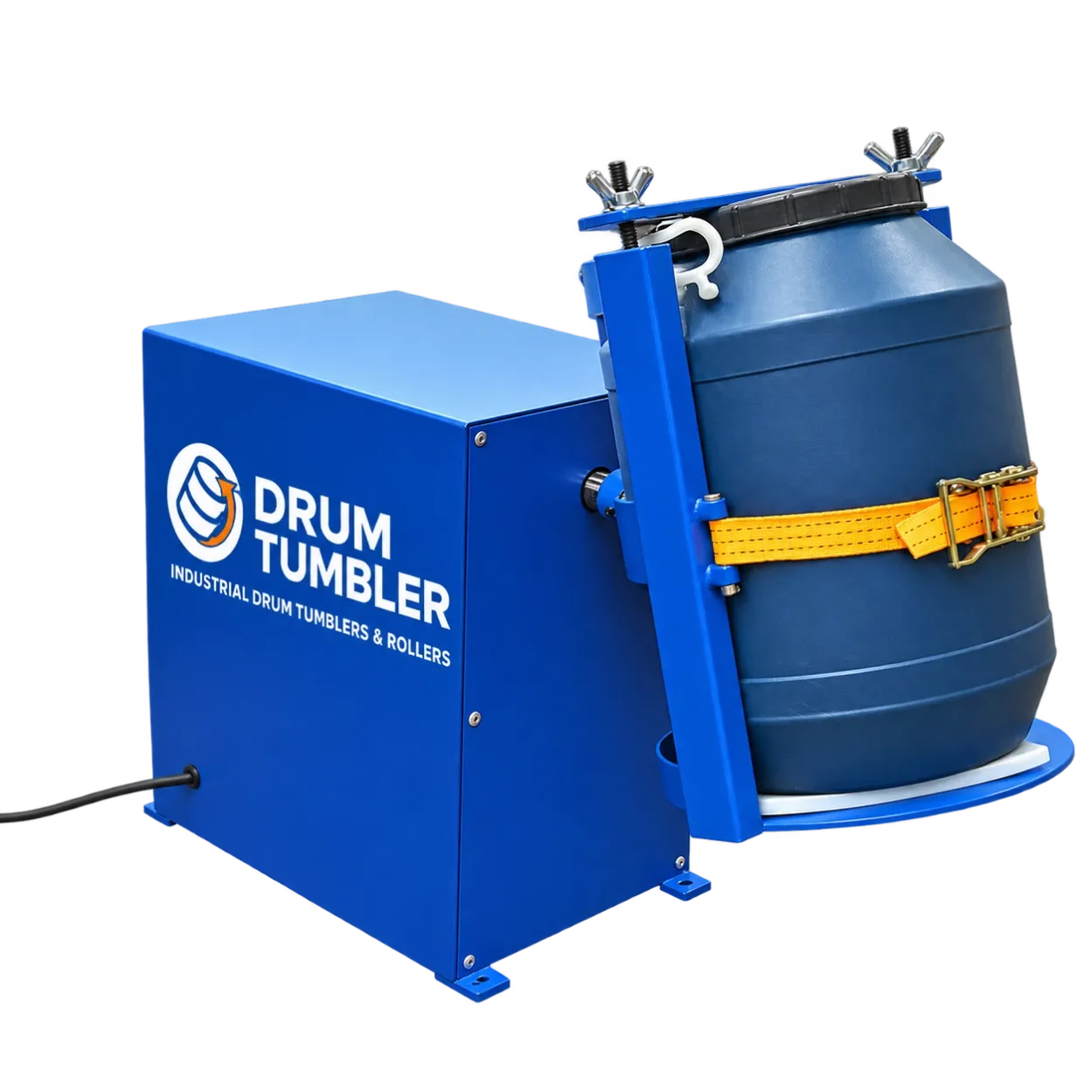
Single-drum models suit one drum at a time: the DT-S5 for one pail, the DT-S50 for one 50-litre drum, the DT-S200 for one 200-litre drum. Double-drum models run two drums in the same cycle, with the same motion and the same sealed mixing: the DT-D5 runs two 1–5 gallon pails, the DT-D100 runs two 100-litre drums on a dual drum holder with timer control, and the DT-D200 runs two 200-litre drums.
Doubling the drums does not double the handling. The drum is still loaded sealed, still runs closed, and still comes out without pouring or cleaning. What changes is the batch: two drums per cycle instead of one. If the line mixes drums one at a time with gaps in between, a single-drum model is enough. If two drums are always waiting, the double-drum model earns its place.
Step 3: Tumbling or rolling — and at what speed?
The third decision is motion, and it depends on the material, not on the drum.
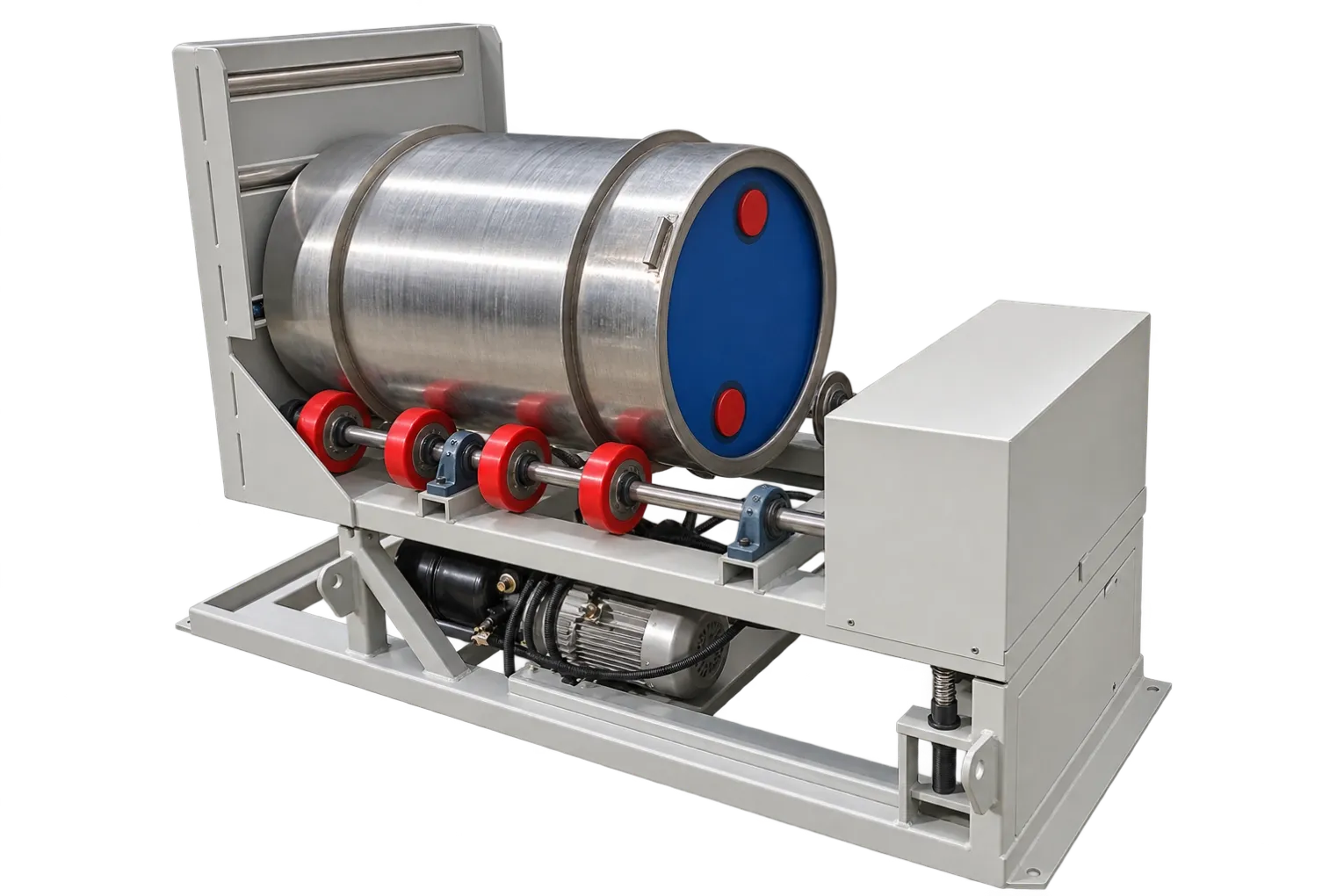
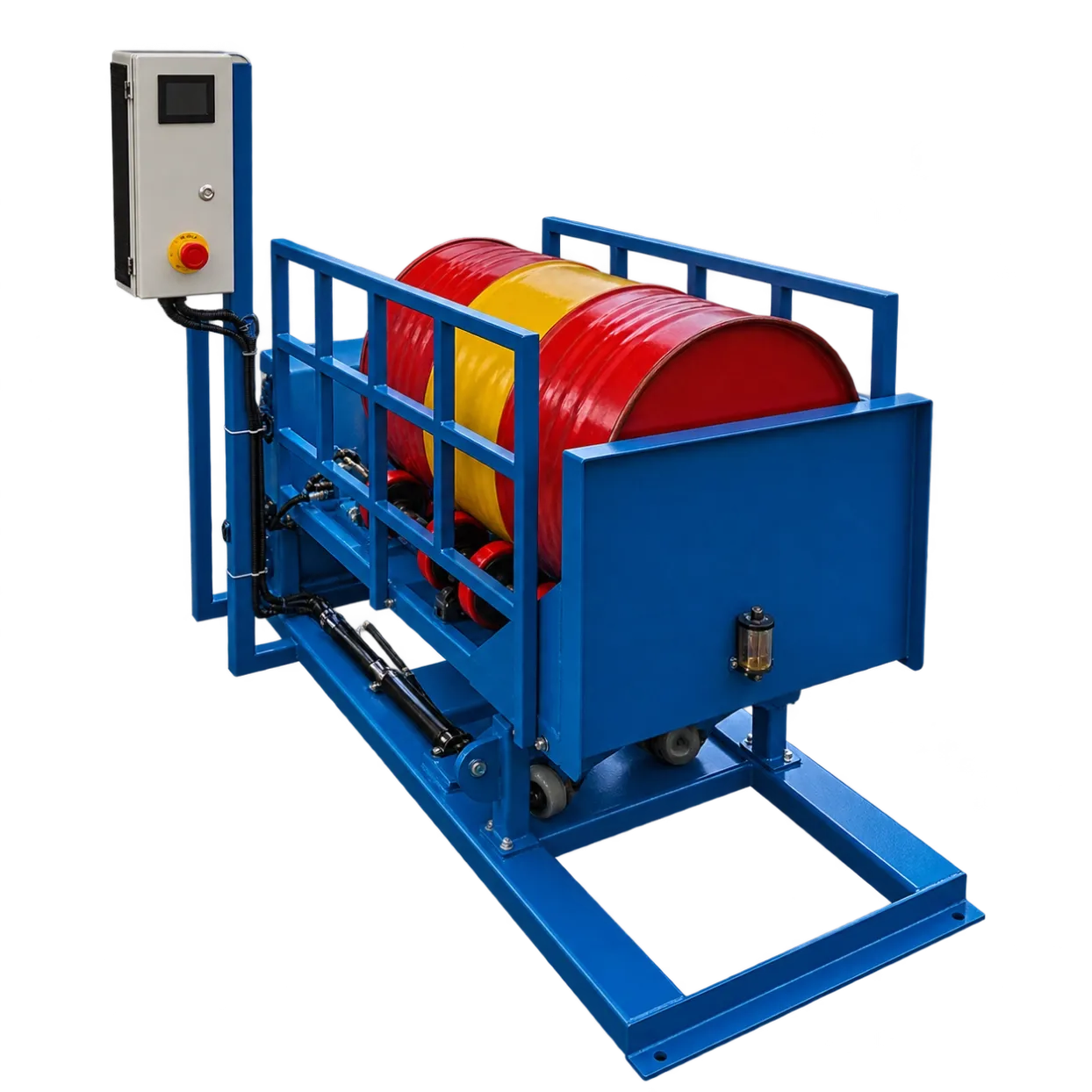
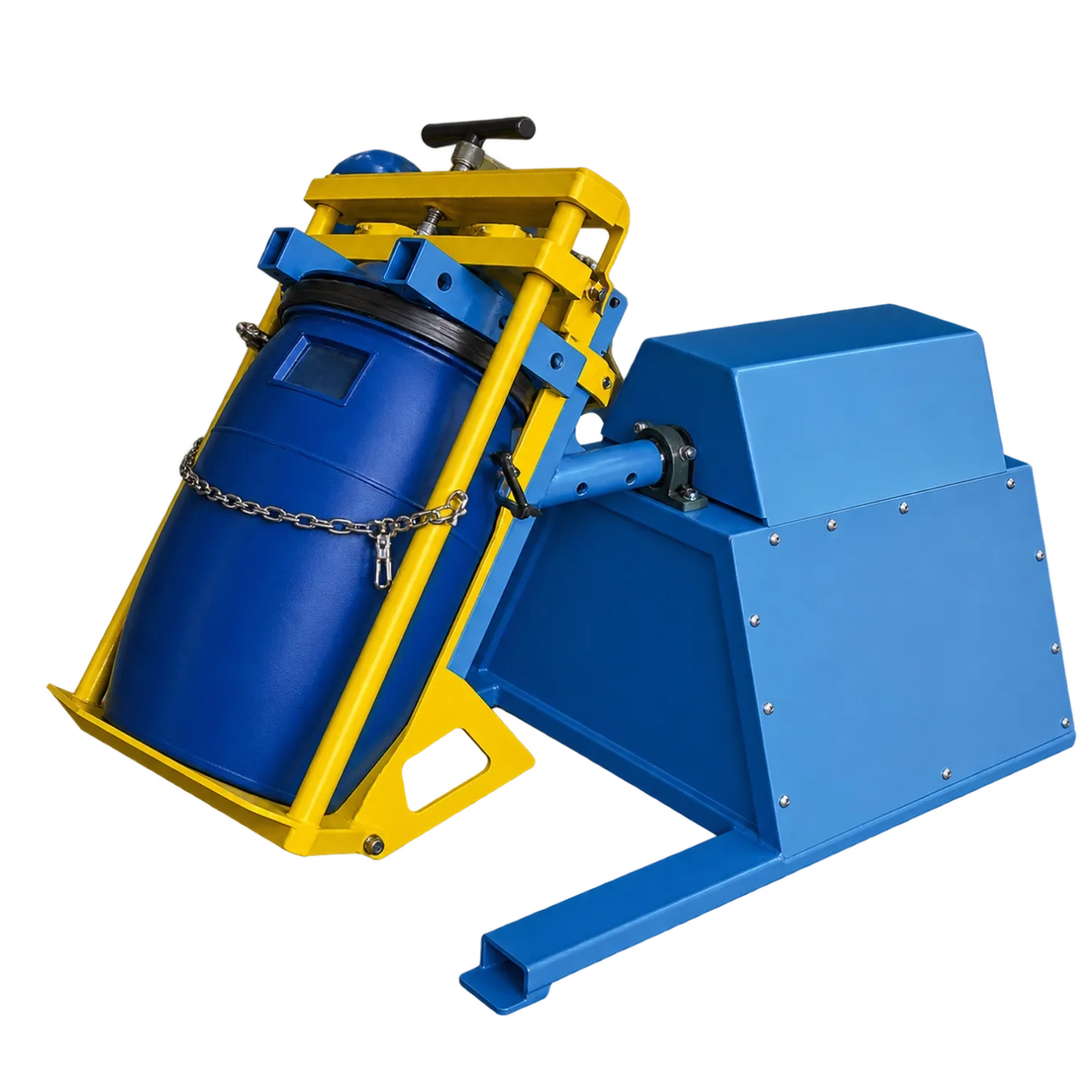
A tumbler rotates the drum corner over corner, lifting and folding the contents as it turns. That active movement suits material that has settled hard or separated during storage and needs a thorough remix inside the drum. A roller turns the drum horizontally, in a gentler rolling motion with full support along the drum. That steady movement suits material that needs regular, gentle blending to stay uniform rather than a full end-over-end turn.
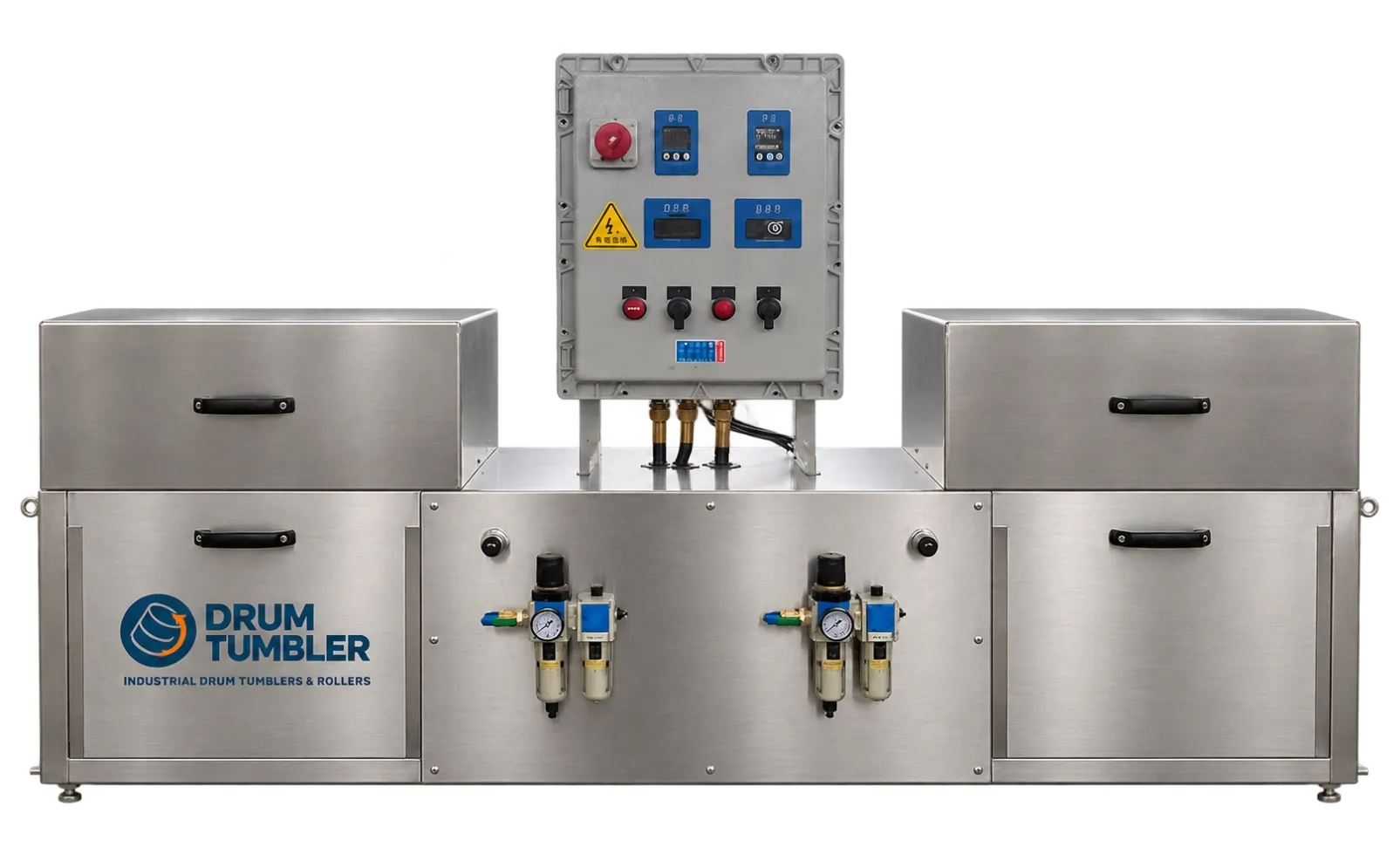
Speed follows motion. The 50-litre and larger tumblers run at 0–30 rpm adjustable (DT-S50, DT-D100) or 0–18 rpm adjustable (DT-S200, DT-D200). The small-pail tumblers, DT-S5 and DT-D5, run at a fixed 50 RPM. The rollers run adjustable: the DT-G100 at 10–30 rpm and the DT-G200 at 0–18 rpm. Adjustable speed is worth having when the same machine will see different batches: a slow turn to keep a batch uniform, a faster turn to lift settled solids. A fixed speed is fine when every batch behaves the same way.
The practical test is simple. If the material settles hard and needs the drum turned over to lift it, choose tumbling. If it needs regular, gentle movement to stay uniform, choose rolling. Both keep the drum sealed, and neither asks the operator to open the lid, pour, or clean a mixer.
Step 4: Check the surroundings
The last step is the working environment: what surrounds the machine while it runs?
Power is the other half of this step. The small-pail tumblers and the DT-G100 roller run on 220 V; the 50-litre and larger tumblers run on 110/220/380/480 V (customizable to order), and the DT-G200 roller runs on 400 V. Check what the plant already supplies before choosing, because voltage is fixed by the model. If the site needs something the standard series does not offer — explosion-proof, variable speed, or PLC control — that is what the customized range is for.
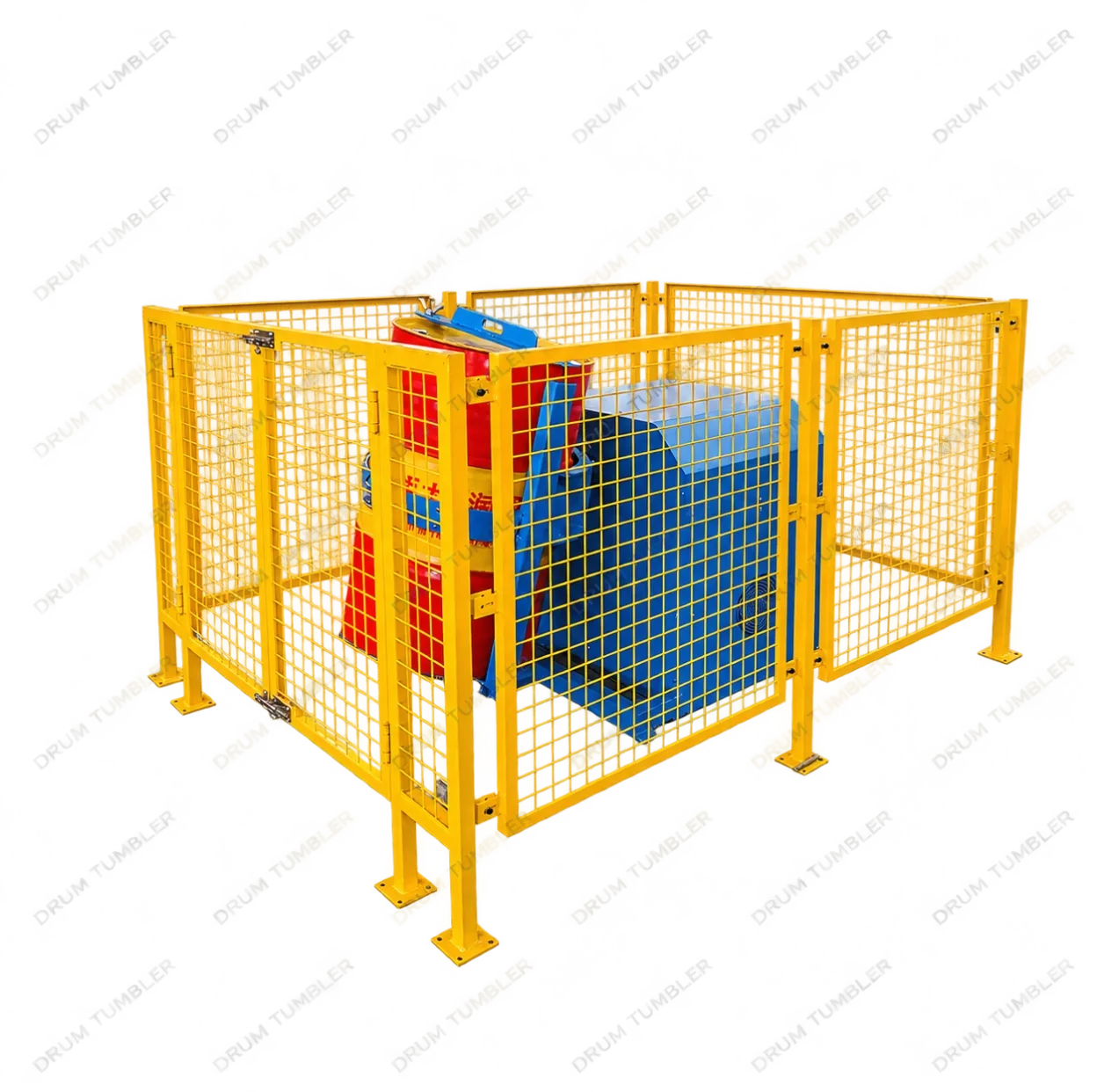
Where solvents or flammable materials are handled, the motor matters. The DT-S50 and the DT-S200 carry explosion-proof motors, and both are fitted with a safety interlock that stops the machine when the door opens. Both keep the drum sealed, so there is no spray, no splash, and no dust released into the plant while the drum turns.
Floor space is the third check. A tumbler turns a drum corner over corner inside its frame. A roller needs a longer footprint, because the drum lies horizontally between the rollers. Leave space around the machine for loading, and for the operator to stand clear while the drum rotates.
Check what the building allows for delivery and installation. A large tumbler weighs enough that it is moved into place with a forklift and then bolted down. If the machine needs to move between workstations, choose a model with wheels; a bolted-down machine cannot be shifted easily.
A worked example
A paint plant mixes 200-litre drums of water-based paint, two drums per batch. Step 1 points to the 200-litre models: DT-S200, DT-D200, DT-G200. Step 2 picks the double-drum model, the DT-D200, because two drums run per cycle. Step 3 confirms tumbling: settled pigment needs the drum turned over, and the DT-D200 runs corner-over-corner at 0–18 rpm adjustable on a 3 kW motor. Step 4 checks the surroundings: the safety interlock is fitted, and the plant's 380 V supply matches. Four steps, one model.
If the same plant switched to solvent-based coatings, step 4 would change the answer: the explosion-proof motor on the DT-S200, or a customized build, would need to be part of the choice. The drum size would stay the same. The environment is what moves.
Quick selection guide
Match the drum size to the motion — tumbling or rolling — and the model follows.
- 1–5 gallon (5–20 L) pails — Tumbling: DT-S5 (one pail) or DT-D5 (two pails), fixed 50 RPM. Rolling: none.
- 50 L drum — Tumbling: DT-S50, 0–30 rpm. Rolling: none.
- 100 L drum — Tumbling: DT-D100 (two drums), 0–30 rpm. Rolling: DT-G100, 10–30 RPM.
- 200 L drum — Tumbling: DT-S200 (one drum) or DT-D200 (two drums), 0–18 rpm. Rolling: DT-G200, 0–18 rpm.
All models above are from DrumTumbler's standard series, and all are built to meet global safety standards, including OSHA, CE, and CSA. When in doubt, the deciding factor is usually the material itself: does it need an active corner-over-corner remix, or a steady horizontal roll? Once that is clear, the drum size narrows the model list to one or two options.
Frequently Asked Questions
Q: What size drum tumbler do I need?
A: Match the machine to the drum. Pails of 1–5 gallons fit the DT-S5 and DT-D5, a 50-litre drum fits the DT-S50, 100-litre drums fit the DT-D100 and DT-G100, and 200-litre drums fit the DT-S200, DT-D200, and DT-G200. Customized models cover 5 L to 200 L for steel, plastic, or fiber drums.
Q: Should I buy a single-drum or double-drum model?
A: Buy for the batch, not for the drum. A single-drum model suits one drum per cycle; a double-drum model runs two drums in the same cycle with the same motion. If two drums are always waiting, the double-drum model saves a full cycle each time. Loading stays the same either way: the drum is loaded sealed and comes out without pouring or cleaning, so the double model saves time, not effort.
Q: What speed should a drum tumbler run at?
A: It depends on the material. The larger tumblers run at 0–30 rpm adjustable (DT-S50, DT-D100) or 0–18 rpm adjustable (DT-S200, DT-D200), the rollers at 10–30 rpm (DT-G100) or 0–18 rpm (DT-G200), and the small-pail tumblers at a fixed 50 rpm. Slower speeds keep a batch uniform; faster speeds lift settled solids. Start slow, then raise the speed only until the batch turns uniform; running faster than the material needs adds wear without improving the mix.
Q: Can one machine handle different drum sizes?
A: Each standard model is built around one drum size, so a machine made for 200-litre drums does not take a 50-litre drum. If the plant runs several drum sizes, the customized range covers 5 L to 200 L with custom motion, power, and speed, including explosion-proof and PLC control options.