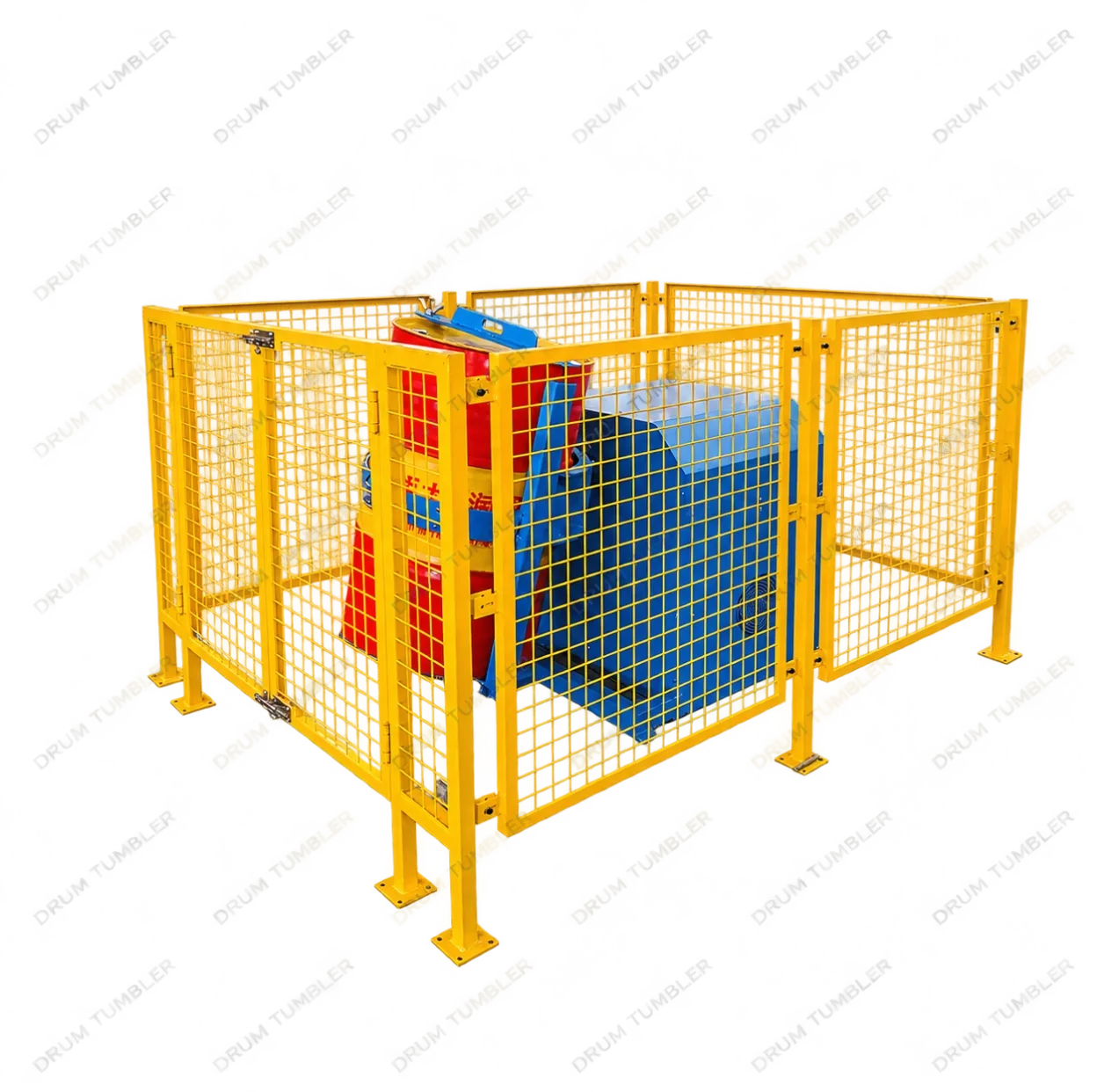
A 50-litre or 100-litre drum does not need a 200-litre tumbler. It needs a machine built around its own size: the DT-S50 for a single 50-litre drum, or the DT-D100 when two 100-litre drums have to move at once. Both use corner-over-corner tumbling, both run at 0–30 rpm adjustable, and both keep the drum sealed from start to finish. The choice between them comes down to how many drums you run per batch — not to how much machine you can afford.
Mid-size drums sit in an awkward gap. A 1–5 gallon can tumbler is too small for them. A 200-litre tumbler will take them, but it is the wrong tool for the job: a bigger frame, a bigger motor and a bigger footprint for a drum that fills half of it. In a paint, adhesive, catalyst, resin or fragrance plant, that mismatch shows up as wasted floor space and a machine that is never used the way it was designed to be used. The DT-S50 and DT-D100 close that gap. They are the middle of the DrumTumbler range, between the small-can DT-S5 and DT-D5 on one side and the 200-litre DT-S200 and DT-D200 on the other.
The DT-S50: one 50-litre drum, sealed and enclosed
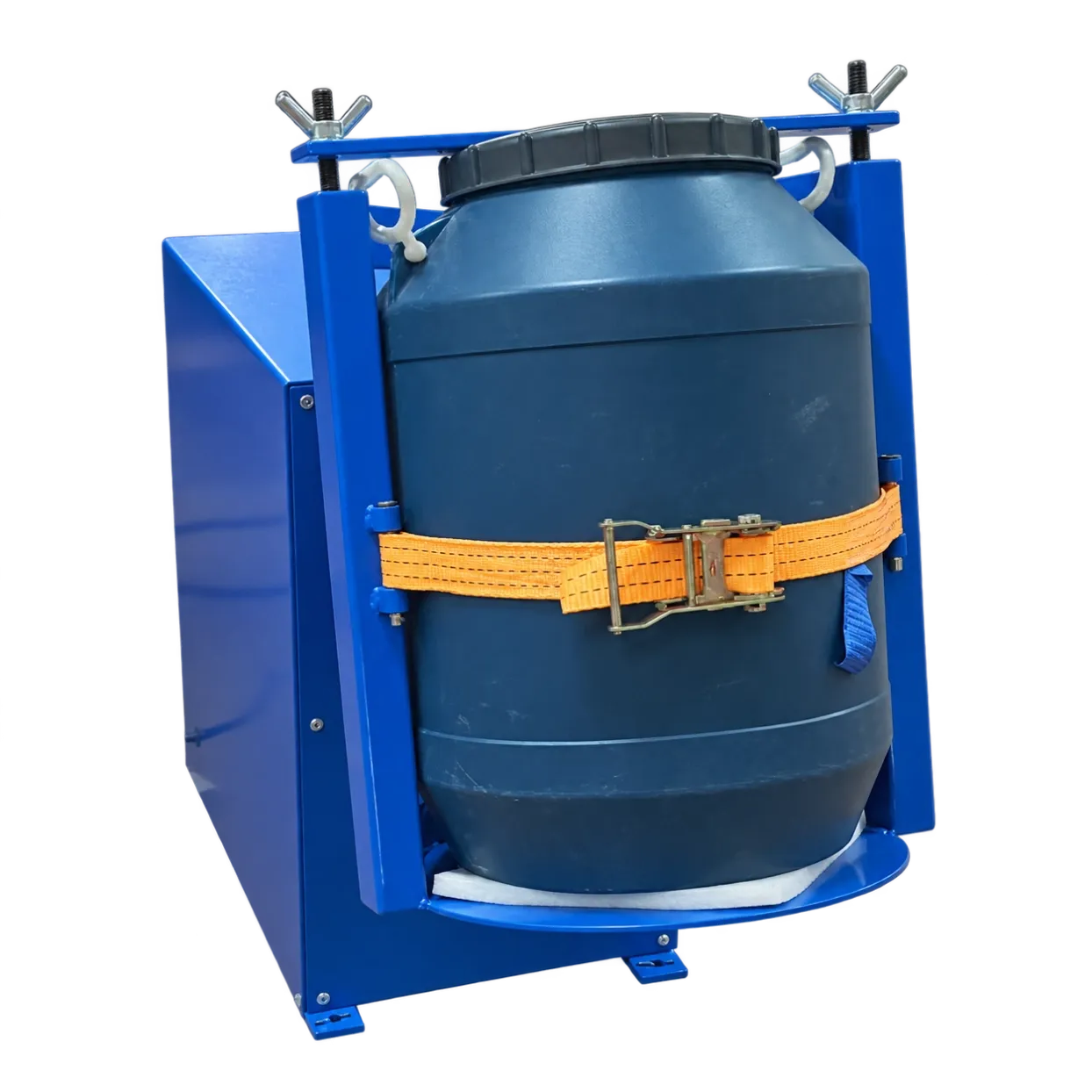
The DT-S50 is a single-drum tumbler for a 50-litre steel or plastic drum, about 13 gallons. It runs on a 0.75 kW motor with corner-over-corner motion at 0–30 rpm, adjustable. Two features matter most in daily use. The first is the explosion-proof motor: in plants handling solvents and flammable materials, that is a requirement, not an extra. The second is the safety enclosure around the drum. The operator loads a sealed drum, closes the enclosure and starts the cycle. Nothing is opened, nothing is poured, and nobody stands next to a turning drum.
A single-drum machine fits a specific pattern of work: one formulation at a time, one drum per batch, often in R&D, colour matching or small production runs. If the drum settles between uses — pigment sinking in paint, filler dropping out of an adhesive — the DT-S50 re-homogenises it inside its own drum. There is no transfer to another vessel, so there is no second container to clean and no material left behind in a transfer line.
The DT-D100: two 100-litre drums in one cycle
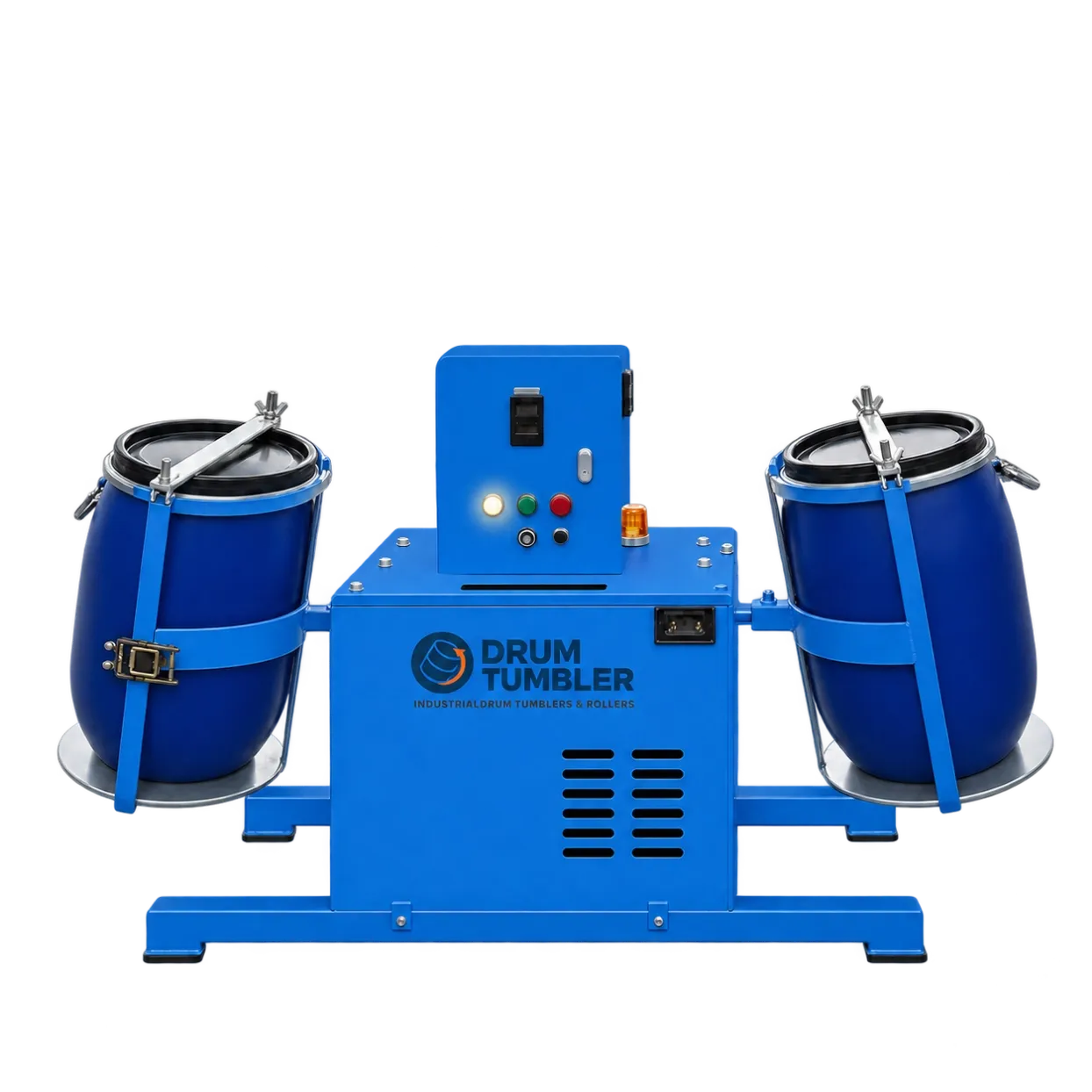
The DT-D100 doubles the batch without doubling the handling. It takes two 100-litre steel or plastic drums at once, on a dual drum holder, driven by a 1.5 kW (2 HP) motor. The motion is the same corner-over-corner tumbling as the DT-S50, at the same 0–30 rpm adjustable range, and it adds timer control so a cycle can be set and left to run.
Two drums in one cycle helps in two situations. The first is volume: a production run that needs 200 litres of the same material in one go, split across two standard drums instead of one oversized one. The second is pairing: two drums of the same batch mixed together, so both come out the same. That matters when a batch is split for storage or shipping and the customer expects both drums to behave identically. One machine, one cycle, two drums with the same history.
When a roller fits better: the DT-G100
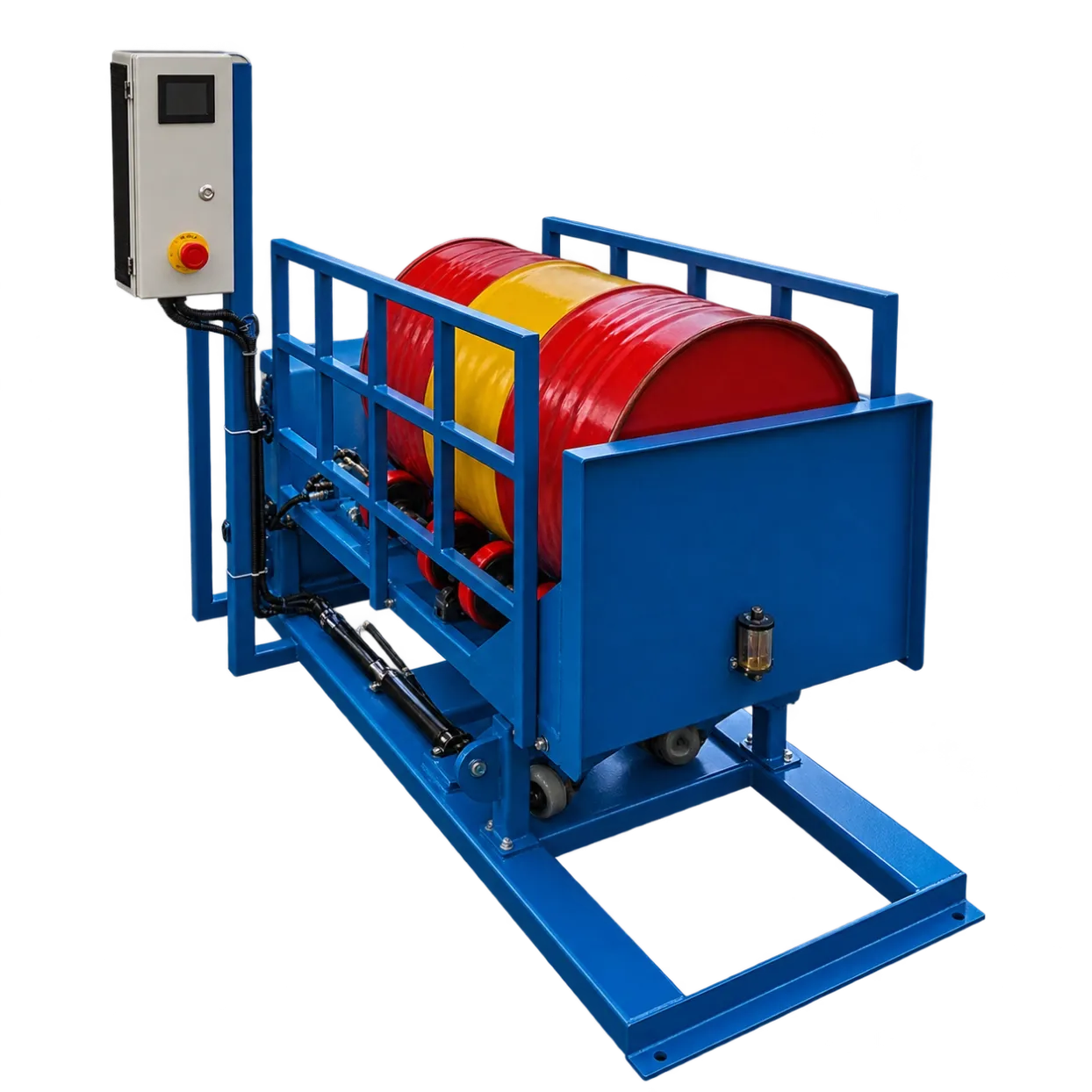
Not every 100-litre drum needs tumbling. The DT-G100 is a drum roller mixer for a single 100-litre drum, rolling it horizontally at 10–30 RPM adjustable on a 1 HP, 220 V motor. Rolling is a gentler motion than corner-over-corner tumbling. For materials that need a slow, steady turn rather than a full end-over-end movement, the roller is the better match. The practical test is simple: if the material settles hard and needs the drum turned over to lift it, choose the tumbler. If it needs regular, gentle movement to stay uniform, choose the roller. Both keep the drum sealed, and both avoid opening, pouring and cleaning.
Three questions that settle the choice
First, how many drums per batch? One 50-litre drum points to the DT-S50. Two 100-litre drums point to the DT-D100. Second, what is the drum made of? Both tumblers take steel or plastic drums, so the drum type rarely decides — but check the drum dimensions against the holder before ordering, because a drum that does not sit properly will not mix properly. Third, does the material need tumbling or rolling? Hard sediment and heavy fillers favour corner-over-corner tumbling; light, regular maintenance mixing favours the DT-G100 roller.
One thing neither machine does: it does not change the formulation. A tumbler re-homogenises what is already in the drum. It does not grind pigment finer, dry a wet material or correct a bad recipe. If the material comes out of the drum uneven because the formulation itself is wrong, mixing it longer will not fix it. What the machine does fix is the handling around the drum — the opening, the pouring, the cleaning and the exposure that come with manual mixing.
The short version
Mid-size drums deserve a mid-size machine. The DT-S50 handles a single 50-litre drum with an explosion-proof motor and a safety enclosure. The DT-D100 handles two 100-litre drums in one timed cycle. The DT-G100 covers the same 100-litre size with gentle horizontal rolling when tumbling is more than the material needs. Pick by drums per batch first, then by motion — and the machine stops being the bottleneck in the drum-handling part of the line.
What is the hardest mid-size drum in your plant to keep uniform — a 50-litre drum of paint, or a pair of 100-litre drums that have to match?
Frequently Asked Questions
Can one machine handle both 50-litre and 100-litre drums?
No — not as a standard configuration. The DT-S50 is built for a single 50-litre drum and the DT-D100 for two 100-litre drums, each with its own holder. If your plant runs both sizes regularly, that is a reason to look at the two models side by side, or to ask about a customised holder for the sizes you actually use.
How do I choose between the DT-D100 tumbler and the DT-G100 roller for a 100-litre drum?
Choose by motion, not by size — both fit a 100-litre drum. The DT-D100 turns two drums corner-over-corner at 0–30 rpm, which suits hard sediment and heavy fillers. The DT-G100 rolls one drum horizontally at 10–30 RPM, which suits gentler, regular mixing. Tell us what settles and how hard, and the choice follows.
Do these machines work with plastic drums as well as steel drums?
Yes. The DT-S50 and DT-D100 both take steel or plastic drums, and the DT-G100 takes steel or plastic drums too. Check the drum's diameter and height against the holder before ordering, because a drum that fits loosely will not turn evenly, whatever it is made of. A loose drum can also shift during the cycle, so measure first and confirm the fit before the machine ships.
Is the DT-S50 safe to use with flammable materials?
The DT-S50 is listed with an explosion-proof motor and a safety enclosure, which is the combination plants handling solvents and flammable materials normally require. The enclosure also keeps the operator away from the turning drum during the cycle. Confirm the exact explosion-proof rating you need with our team before ordering, so the motor supplied matches your site's classification.