How to Mix Solvent-Based Coatings in a Sealed Drum
Can you mix solvent-based coatings inside a sealed drum? An explosion-proof drum tumbler re-mixes flammable coatings without opening the lid — Ex motor, safety enclosure and reduced vapour exposure.
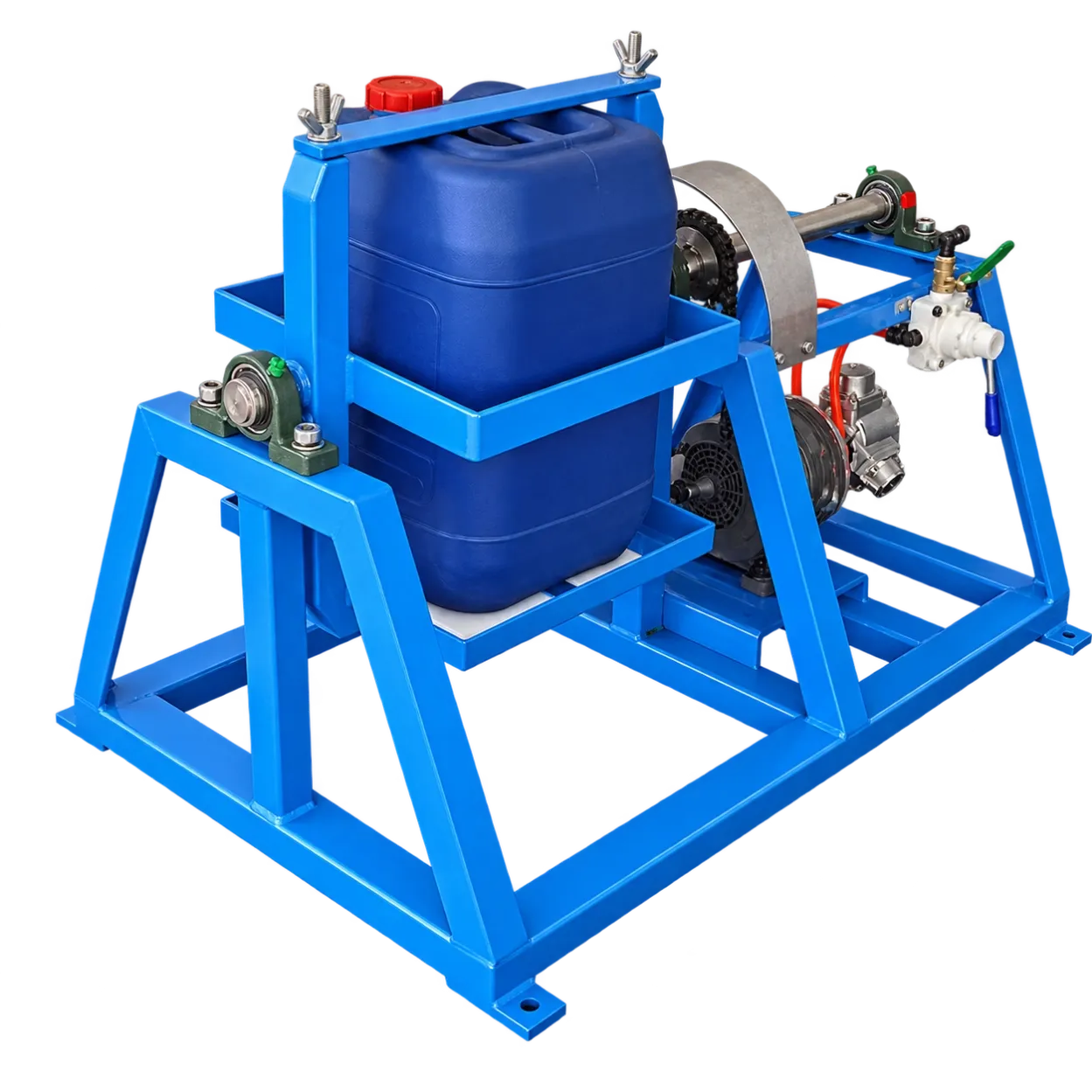
Why solvent coatings are the risky case
A solvent-based coating is flammable twice over. The liquid itself burns, and the vapour above it in the drum can ignite at a much lower concentration than most people expect. Manual mixing makes both problems worse: the lid comes off, the vapour escapes into the room, and the operator stirs with a paddle or a drill — a sparking tool, in a cloud of vapour, next to an open drum. That is the combination every safety rule in a paint plant is written to avoid.
Sealed mixing removes the open drum from the picture. The drum is loaded closed, clamped, and turned end over end. Nothing is poured, nothing is stirred by hand, and vapour exposure is reduced. But sealing alone is not enough. The machine turning the drum is itself an electrical device, and a standard motor, switch or control box can spark. That is why the tumbler has to be explosion-proof as well as sealed — the two features solve two different halves of the same risk.
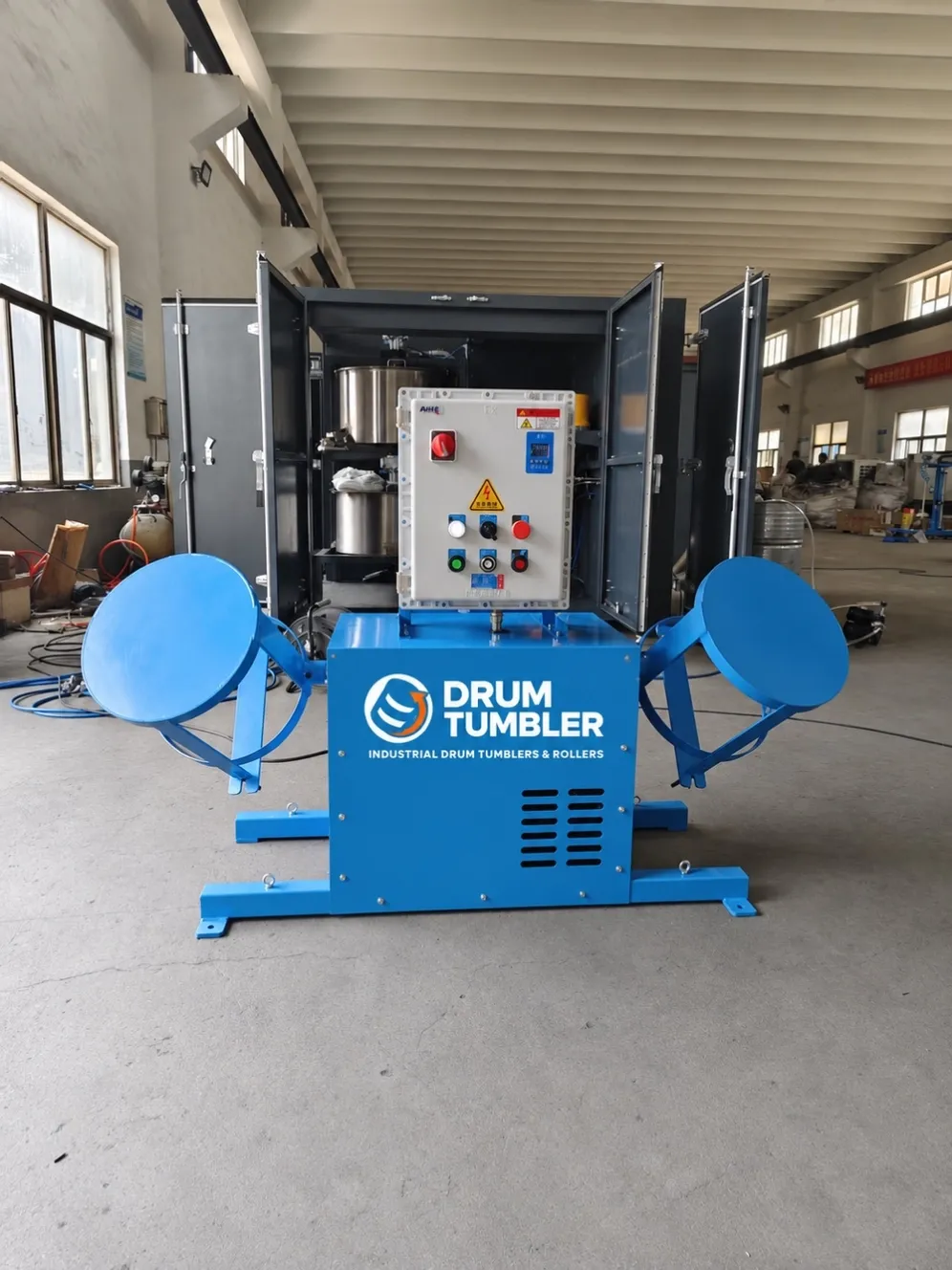
What "explosion-proof" means on a tumbler
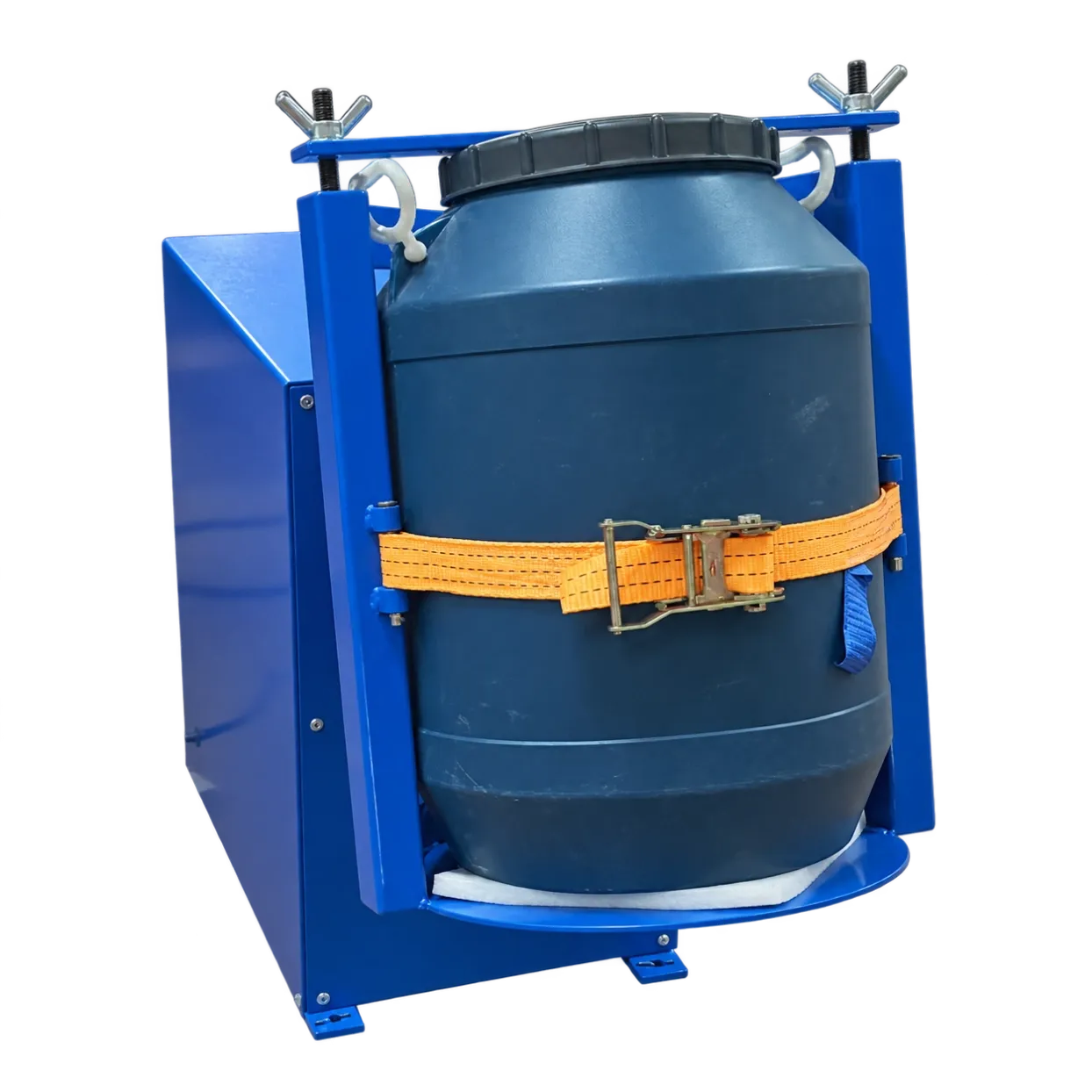
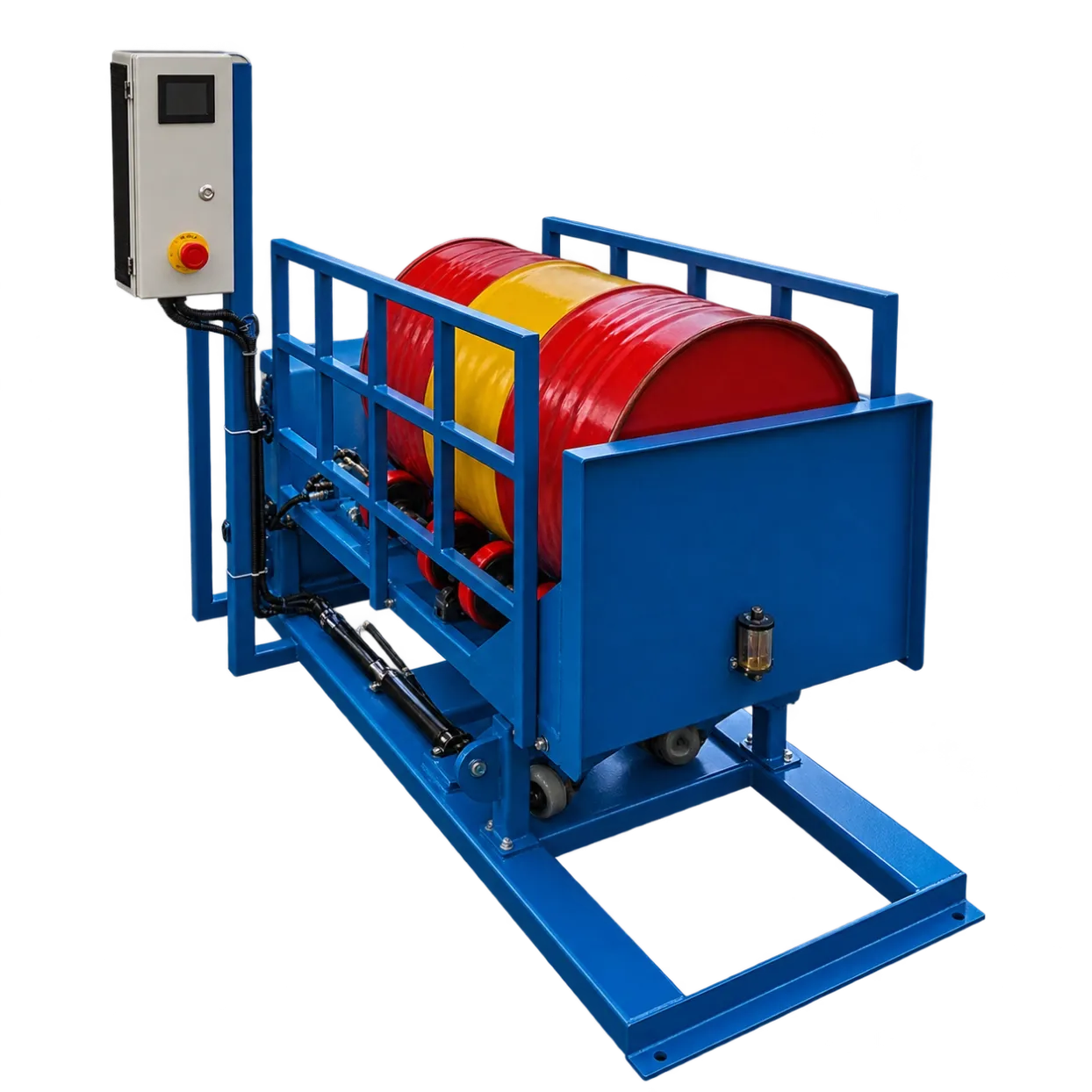
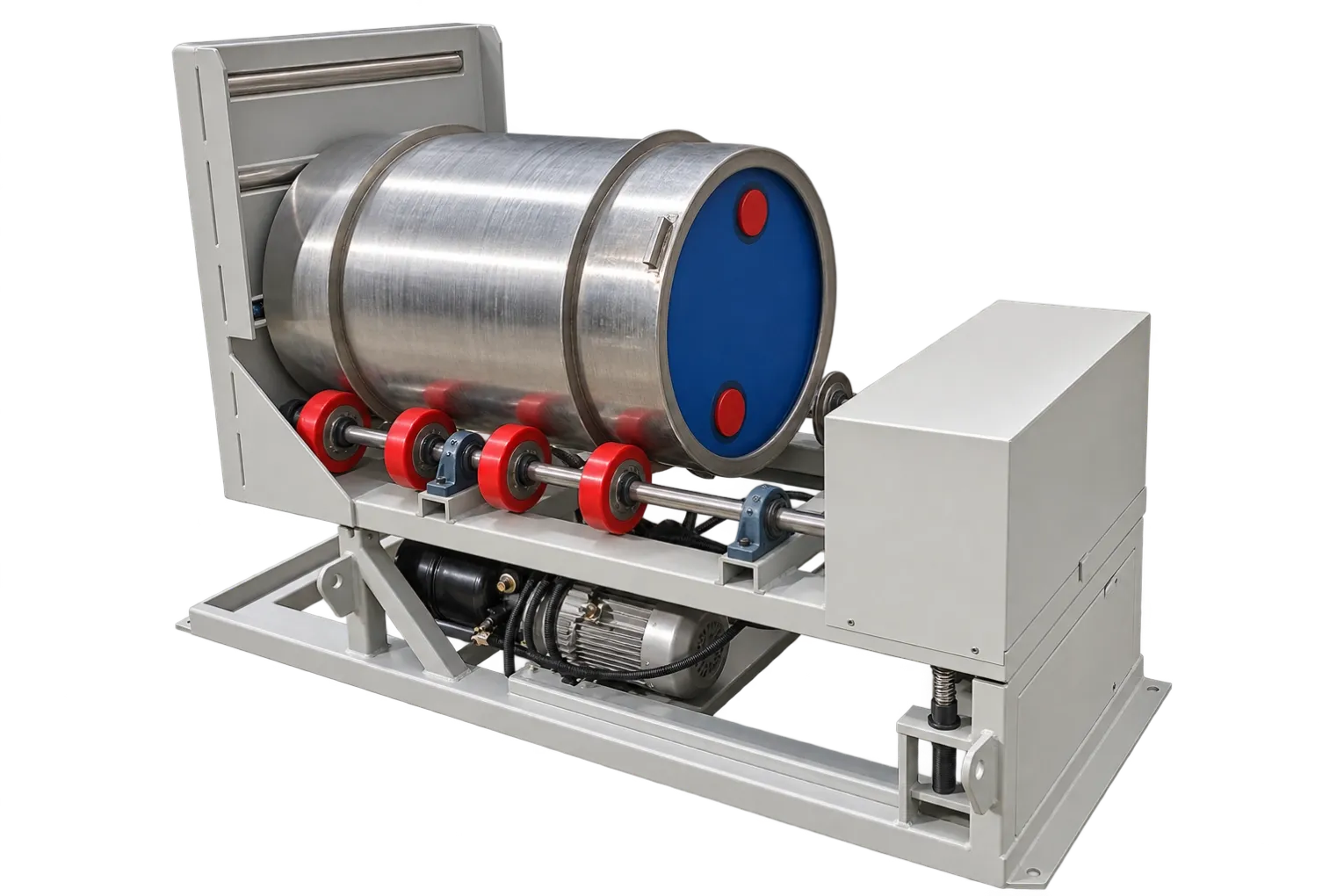
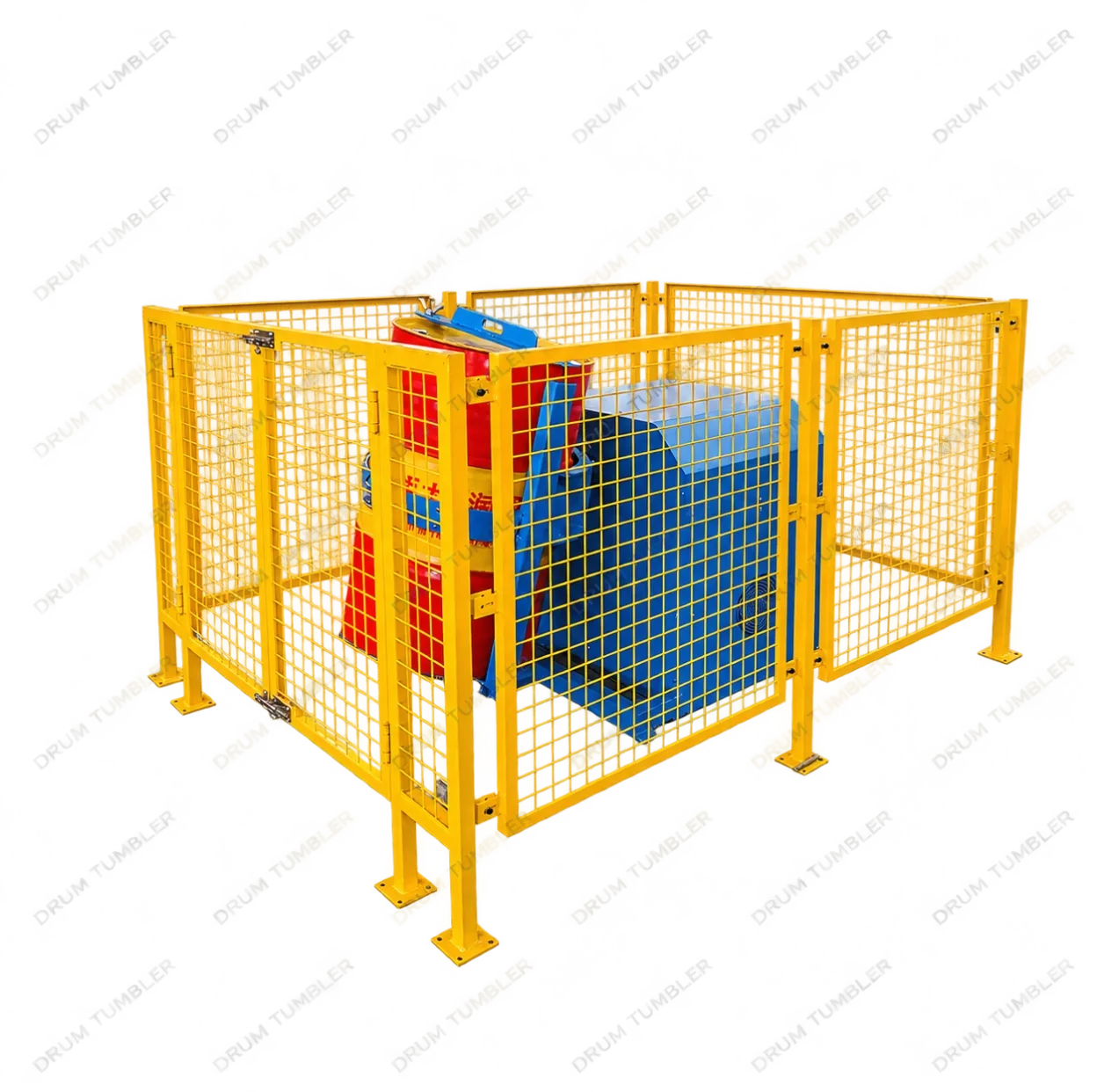
On a DrumTumbler machine, explosion-proof is not a single part. It is the motor, the controls and the enclosure working together. The motor is an explosion-proof unit: its housing contains any spark inside, so it cannot reach the vapour outside. The control box is built the same way, with sealed cable entries and no exposed switching in the open air. The DT-S50 pairs that motor with a safety enclosure around the drum itself — the operator loads a sealed 50-litre drum, closes the enclosure and starts the cycle. The DT-S200, for a 200-litre drum, adds hydraulic tilting for loading and the same explosion-proof motor and sealed mixing. The DT-D200, which turns two 200-litre drums at once, adds a safety interlock so the cycle cannot run with the guard open.
Three numbers are worth checking when you compare models. The DT-S50 runs a 0.75 kW motor at 0–30 rpm adjustable, corner-over-corner. The DT-S200 runs a 1.5 kW (2 HP) motor at 0–18 rpm, with tilt-to-load. The DT-D200 runs a 3 kW motor at 0–18 rpm for two drums. Speed is adjustable on all three, which matters more than it sounds: a heavy, settled coating needs a slow, strong turn to lift the sediment, not the fastest spin the machine can do.
The sealed drum does half the safety work
People focus on the motor, but the sealed drum is doing just as much. A drum that stays closed keeps the vapour concentration inside the drum, where there is no ignition source — the spark risk is outside, in the room air. It also keeps the operator away from the material: no fumes to breathe, no solvent on skin, no cleaning solvent needed afterwards, because there is no second vessel to clean. The coating goes back into storage or production in the same drum it arrived in.
That is also why the enclosure matters. A turning drum is a heavy moving object. The safety enclosure on the DT-S50 and the interlock on the DT-D200 keep the operator away from it during the cycle and stop the machine if the guard is opened. Explosion-proof is about fire; the enclosure is about the person standing next to the machine. A plant handling solvents needs both, and the two are not interchangeable.
What to check before ordering
First, confirm the explosion-proof rating your site requires. "Explosion-proof" is a family of ratings, not one certificate — tell the supplier your site classification and the solvents you run, and confirm the motor supplied matches it. Second, check the drum. The tumbler takes standard steel or plastic drums, but measure the diameter and height against the holder: a drum that fits loosely will not turn evenly, and a loose drum in a sealed cycle is a problem you do not want to find halfway through a batch. Third, remember the room still has its own rules. An explosion-proof tumbler removes the ignition source on the machine; it does not ventilate your plant, ground your drums or replace your site's fire procedures. The machine is one part of a safe setup, not the whole setup.
The short version
Solvent-based coatings can be mixed inside a sealed drum, safely, when the machine is built for it: an explosion-proof motor and controls that cannot spark, a drum that never opens during the cycle, and an enclosure or interlock that keeps the operator away from the turning drum. The DT-S50 covers a single 50-litre drum, the DT-S200 a single 200-litre drum, and the DT-D200 two 200-litre drums at once. Pick by drum size first, then confirm the explosion-proof rating against your site — and the drum-handling step stops being the riskiest part of the line.
What is the most flammable coating in your plant — and is it still being mixed with the lid off?
FAQ
Does an explosion-proof tumbler remove all fire risk?
No. It removes the ignition source on the machine itself — the motor and controls cannot spark into the room air. The room still needs ventilation, drum grounding and your site's fire procedures. Think of the tumbler as one part of a safe setup: it makes the mixing step safe, it does not make the whole plant safe by itself.
Can I use the DT-S50 for water-based paint as well?
Yes. The explosion-proof motor is a requirement for solvents, not a limitation for other coatings. The DT-S50 mixes water-based paint, adhesives and resins the same way it mixes solvent-based coatings — sealed, corner-over-corner, at 0–30 rpm. You do not need a second machine for the non-flammable products, and one machine for the whole range keeps training and spares simple.
What does the safety enclosure actually do?
It keeps the operator away from the turning drum during the cycle, and it stops the machine if the guard is opened. On the DT-S50 the enclosure surrounds the drum; on the DT-D200 a safety interlock does the same job for two drums. It is about the person next to the machine, while the explosion-proof motor is about fire — a plant handling solvents needs both.
Do I need a special drum for explosion-proof tumbling?
No. The DT-S50, DT-S200 and DT-D200 all take standard steel or plastic drums in their stated sizes. Check the drum's diameter and height against the holder before ordering, because a drum that fits loosely will not turn evenly. A loose drum can also shift during the cycle, so measure first and confirm the fit before the machine ships.