Mixing 1–5 Gallon Pails Without Opening Them: A Small-Batch Answer to Settling
Tint bases, adhesives, and fragrance compounds settle in 1–5 gallon pails just like in 200-litre drums. Sealed pail tumbling re-mixes the closed pail — no skinning, no spills, no mixer to clean.
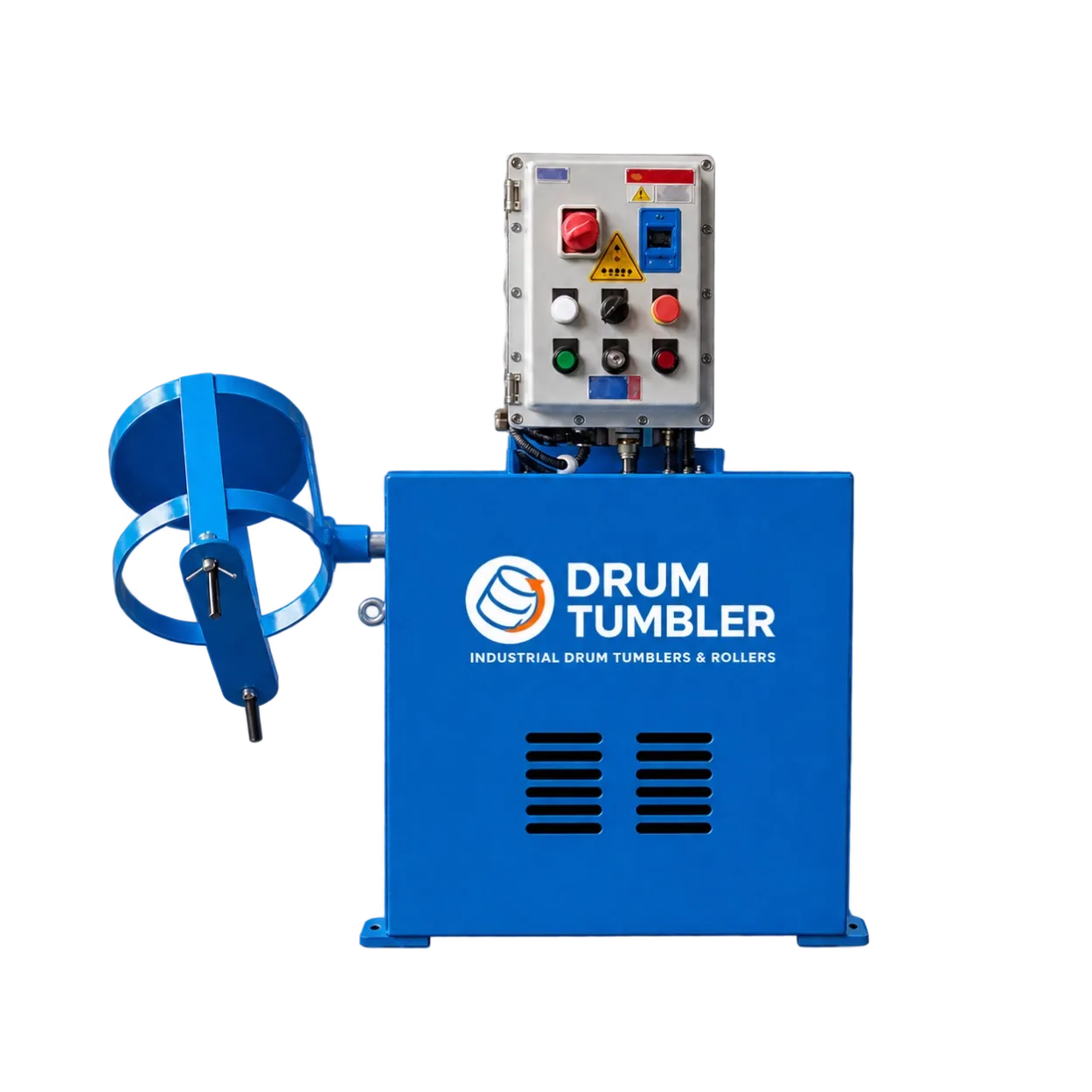
Small containers settle for the same reason big drums do, and the consequences land harder. A tint base that sat in the warehouse for three months has pigment packed at the bottom; a one-gallon trial mixed from the top of that pail comes out a shade light, the drawdown fails against the standard, and the trial is scrapped — not because the formula was wrong, but because the sample was. Adhesives separate the same way: the resin-rich layer on top brushes on thin, the filler-heavy bottom goes on thick, and bond strength varies across the joint. Fragrance compounds stratify too, and the first pour smells different from the last. At production scale a bad sample wastes a drum; at bench scale it wastes the trial, the technician's afternoon, and the retained sample that was supposed to prove the batch.
Opening a small pail to fix this costs more than it looks. Peel the lid and the clock starts: solvent flashes off, the surface starts skinning, dust from the room settles in. Pour the contents into a mixer and you have created two cleaning jobs — the mixer and the pail — for a two-litre batch. Stir it in the pail with a stick and you have whipped air into a product that now needs to de-aerate before it can be drawn down. Run five tint trials in a morning and the bench looks like a crime scene: five open pails, five dirty sticks, and color from trial two drifting into trial three. Anyone who has matched a color across trials knows that drift is the enemy — a speck of phthalo blue in a pastel base ruins the whole card.
Sealed pail tumbling removes the open container from the procedure entirely. The pail stays closed from storage to mixing to sampling. Nothing evaporates, nothing skins, nothing drifts in from the next trial on the bench. The pail itself is the mixing vessel, so there is no transfer step and nothing to wash afterward. Changeover between trials is a pail swap: lift one pail off, set the next one on. A lab can run a red oxide trial, a carbon black trial, and a titanium white trial back to back with changeover measured in seconds, and the only thing that touched the product was the inside of its own pail.
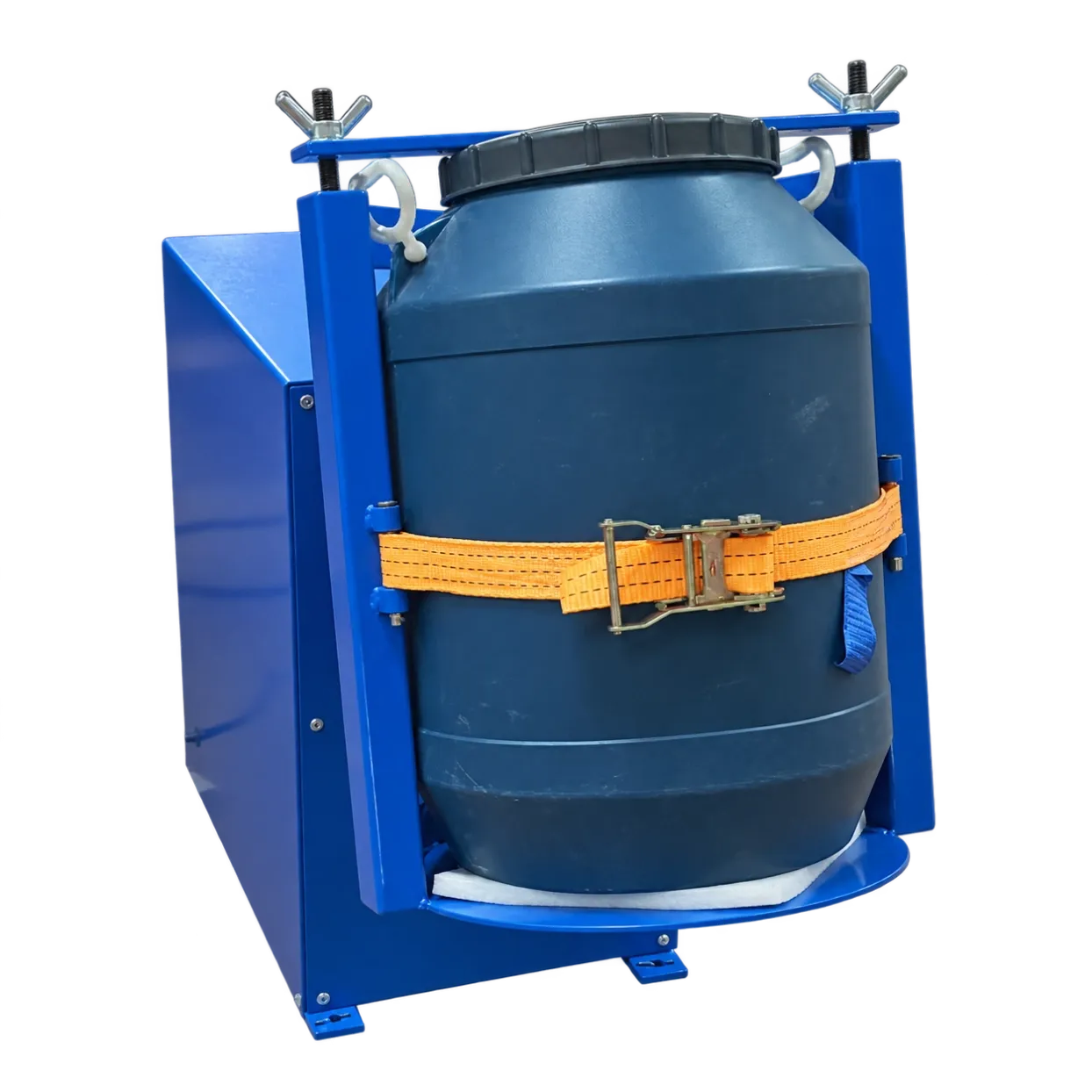
The motion is the same corner-over-corner tumbling used on full-size drums, scaled to the pail. The pail is clamped and rotated so its contents are lifted and folded over themselves with every turn. That folding action is what breaks up the settled layer at the bottom and re-blends it through the full volume — more effective than shaking, and without the air entrainment that a high-speed stirrer would cause in a small container.
Two models cover the range. The DT-S5 is the single-pail tumbler: one 1–5 gallon (5–20 L) pail per cycle, 0.5 HP on standard 220 V power, fixed 50 RPM. It sits on a bench or a stand and needs no special wiring, which is why it fits in a QC lab or a tint room. The DT-D5 is the double-pail version: two pails in one cycle, 1 HP, 220 V, fixed 50 RPM. The second slot is more useful than it sounds — run the trial pail and the retained standard side by side under the identical cycle, and the drawdown comparison is honest. Or run two color trials in the same cycle and halve the bench time. Both keep the pail sealed throughout, so the choice is throughput: one pail per cycle, or two.
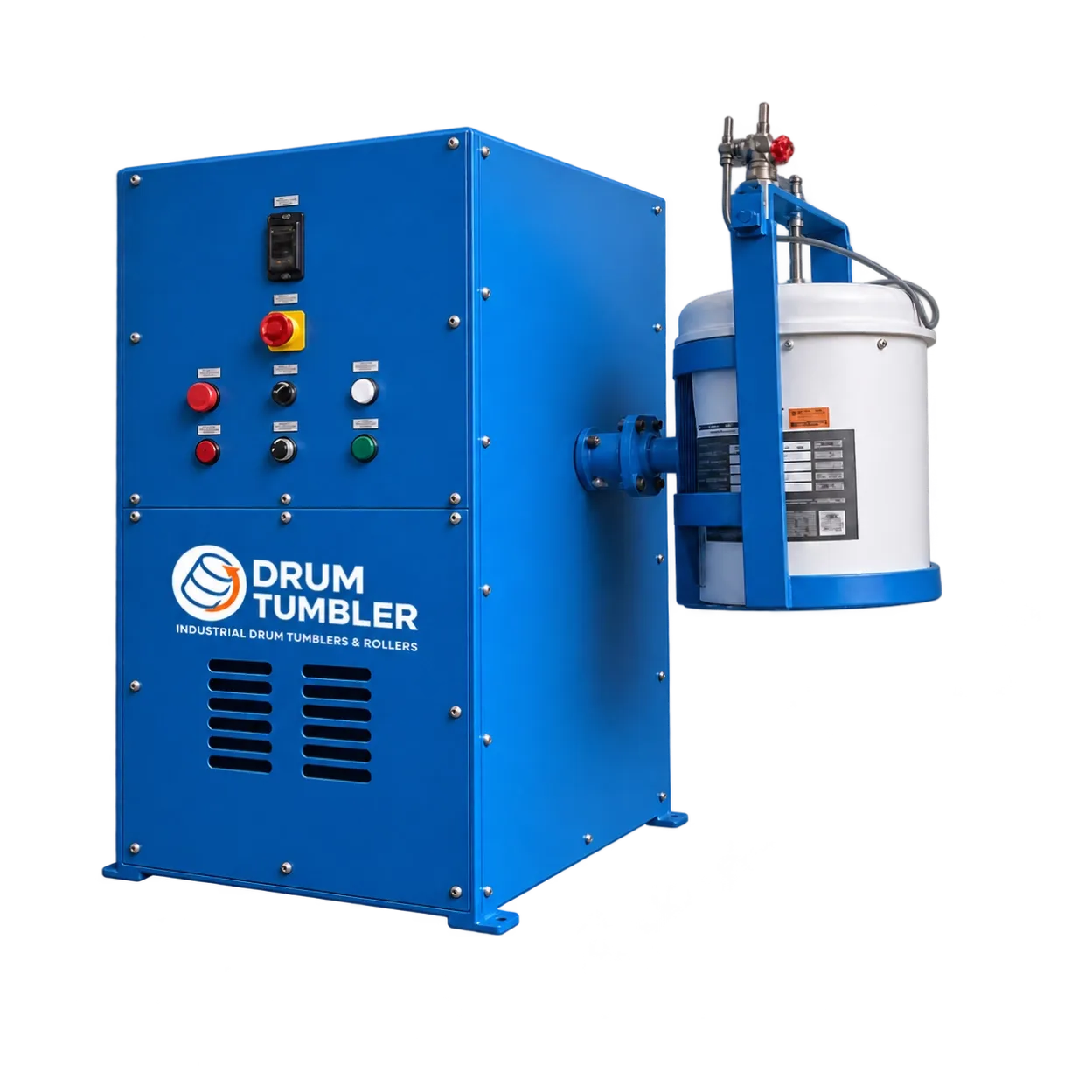
The fixed speed is worth a note. On a 200-litre production tumbler the speed adjusts across a range because the batch varies; on a pail tumbler the load is small and consistent enough that one well-chosen speed does the job. Fifty RPM is fast enough to fold the contents and slow enough not to beat air into them. If a blend needs gentler handling, that is what the roller series is for — but for re-blending a settled tint base or adhesive, the tumbling motion is the right tool.
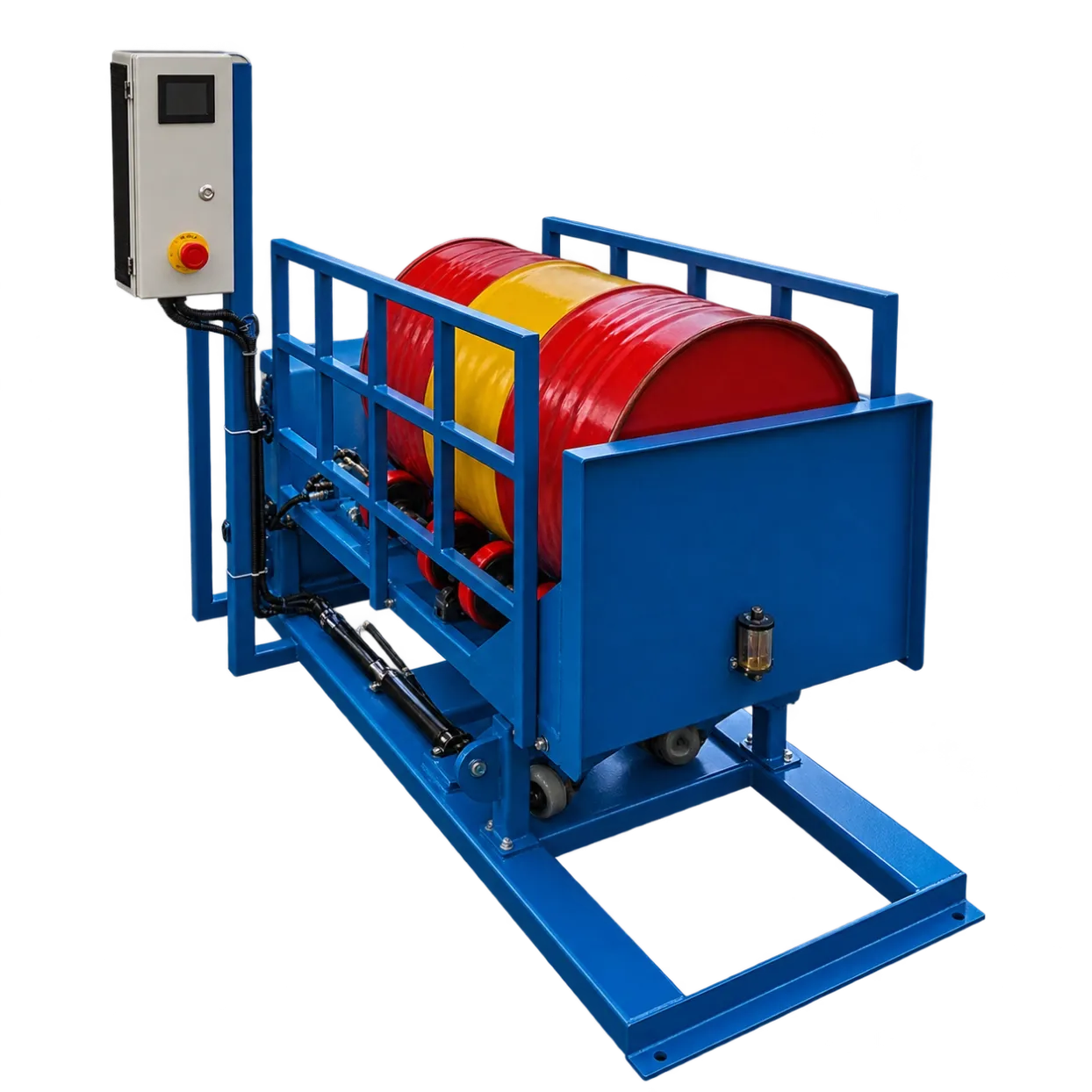
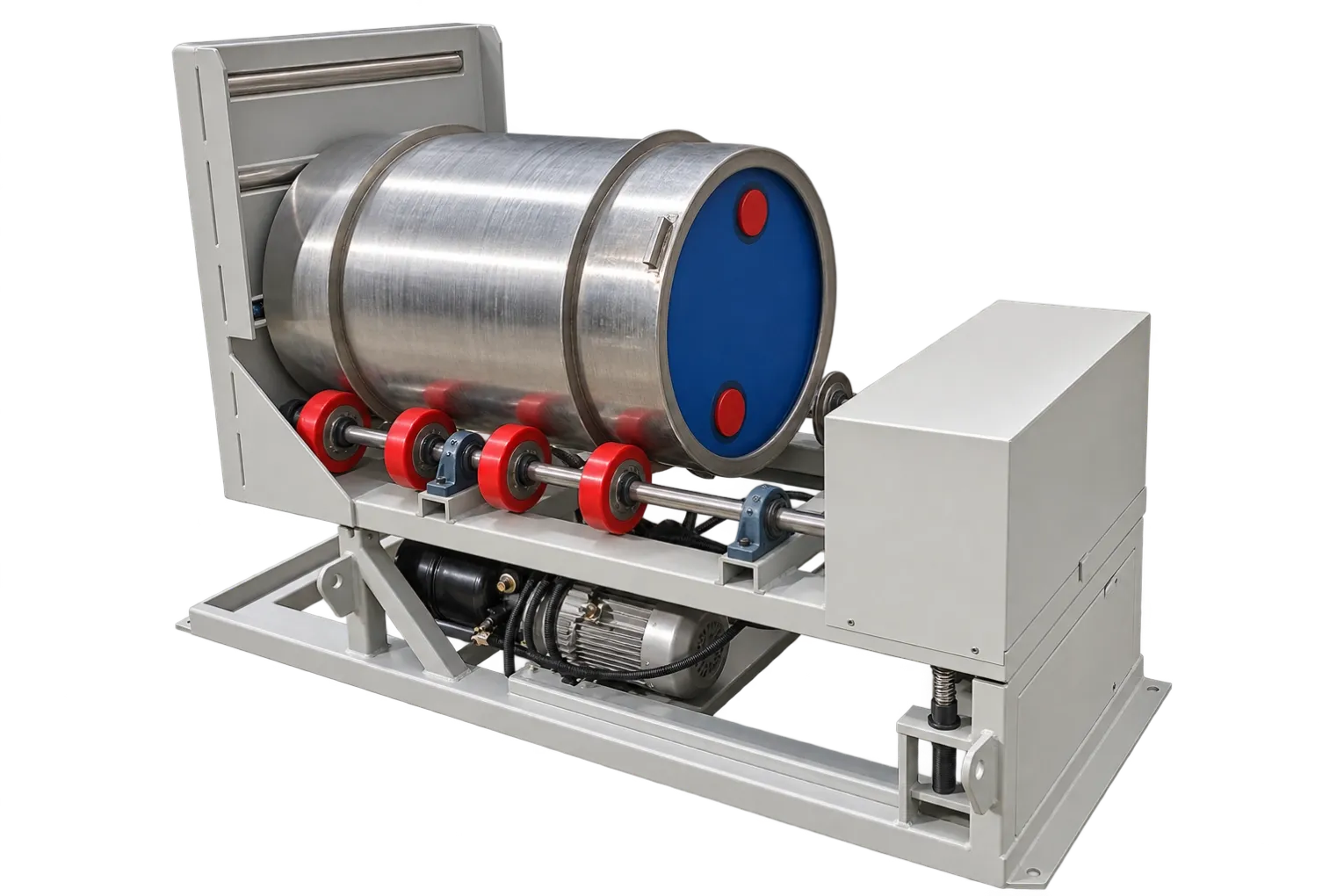
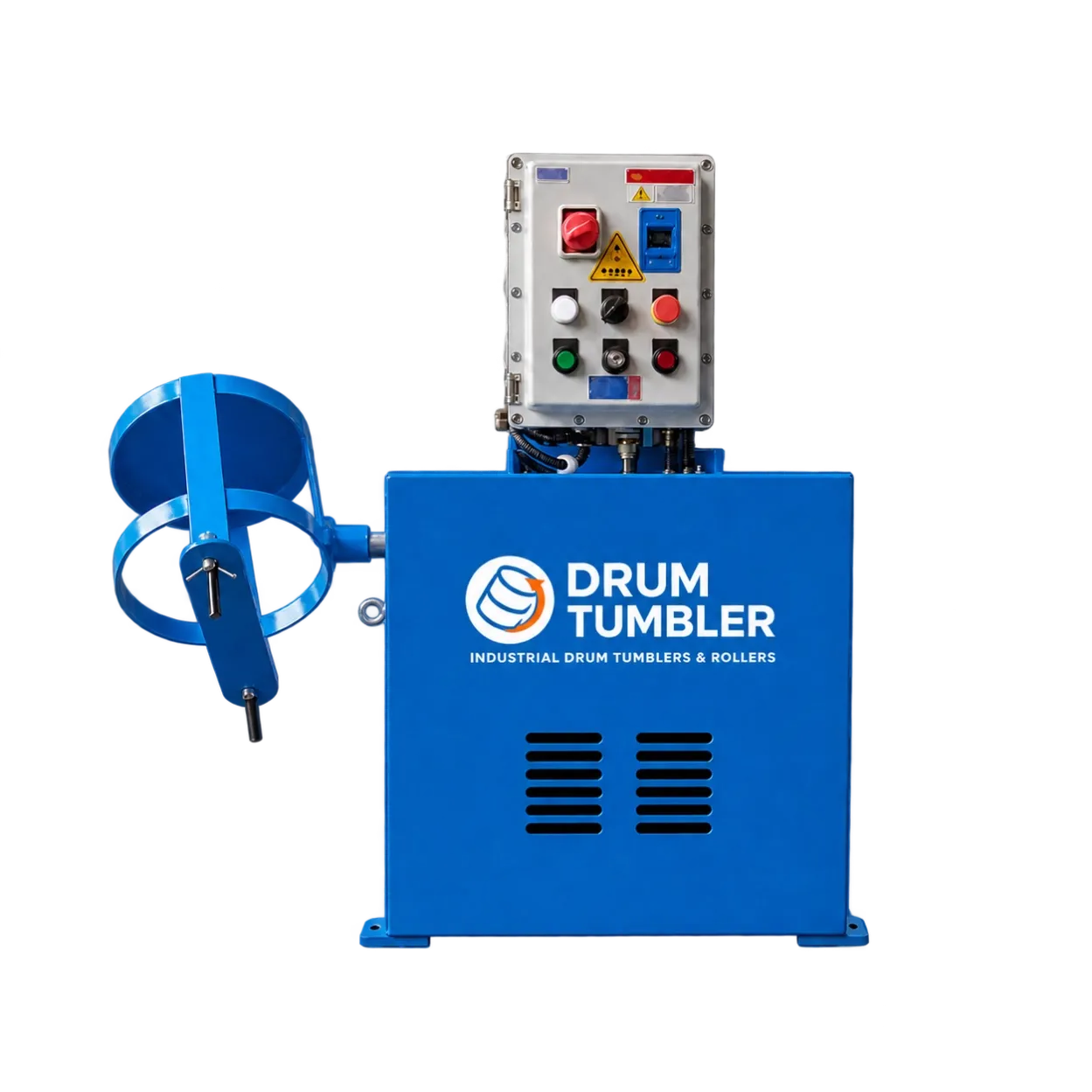
There comes a point where the pail is the wrong container. When a trial graduates to pilot production, the same sealed principle scales up: a 50-litre drum fits the DT-S50 (0.75 kW, 0–30 rpm adjustable, explosion-proof motor, safety enclosure), and standard 200-litre production drums fit the DT-S200 single-drum tumbler (1.5 kW (2 HP), 0–18 rpm adjustable, hydraulic tilting, explosion-proof motor) or the DT-D200 double-drum tumbler (3 kW, 0–18 rpm adjustable, safety interlock) for two drums per cycle. The procedure the lab validated — closed container, tumble, sample — transfers unchanged; only the container gets bigger.
A sensible way to start is with the worst-behaved pail on the shelf. Take the tint base that fails drawdowns most often, or the adhesive that separates between Monday and Friday. Run one tumbling cycle, then sample top, middle, and bottom against the specification. One pail is enough to prove the principle, and the trial costs nothing but the cycle time.
It is worth being clear about what tumbling does not do. It re-blends; it does not grind. If pigment agglomerated into hard lumps, that needs a mill. It will not fix a formula that was weighed wrong, and it will not dry a product that picked up moisture. What it does reliably is restore uniformity to a product that settled in storage — which, for small pails, is the most common reason a trial fails before it starts.
Frequently Asked Questions
Will tumbling damage the pail or pop the lid?
No. The pail is clamped in a holder designed for its size, and the lid stays as sealed as it was in storage — the machine never pries or stresses the closure. Standard steel and plastic 1–5 gallon pails handle the cycle routinely. If a pail is dented or its lid seal is already compromised, replace the pail rather than testing the seal on the machine.
How long does a pail need to tumble?
It depends on the product and how long it sat. A tint base settled for a month typically re-blends in one cycle at the fixed 50 RPM; a heavily separated adhesive may need a second cycle. The reliable method is the trial described above: tumble once, sample top, middle, and bottom, and compare against your specification before committing the batch.
Can I run two different products in the DT-D5 at once?
Yes, with one condition: both pails get the same cycle, since the machine runs one speed. Two tint trials, or a trial plus its retained standard, work well together. Do not pair products with very different re-blend needs in the same cycle — run the demanding one alone rather than over-cycling the easy one.
Does sealed mixing replace the lab mixer?
No — it replaces the re-blending step, not formulation. You still need a mixer or disperser to make the product in the first place. What the pail tumbler removes is the daily chore of re-homogenizing stored pails before sampling: no pouring, no stirring, no cleaning, and no open pail sitting on the bench collecting dust.